Demystifying AI: The Ultimate Beginner's Guide to Understanding Artificial Intelligence
Artificial intelligence isn’t magic. It’s not something only engineers in Silicon Valley understand. It’s not going to take over your job tomorrow. But if you don’t know what it is, you’ll keep hearing buzzwords like AI, machine learning, and neural networks without knowing what they actually mean. This guide cuts through the noise. No jargon. No fluff. Just what you need to know to understand AI as a real tool-not a sci-fi fantasy.
What Exactly Is Artificial Intelligence?
AI is software that does things that normally require human intelligence. That’s it. Think of it like a very smart calculator. Instead of adding numbers, it recognizes faces in photos, recommends movies you might like, or translates languages in real time. It doesn’t think like you do. It doesn’t have feelings or goals. It just finds patterns in data and makes predictions based on them.
Take spam filters in your email. They didn’t start out knowing what spam looked like. But after seeing millions of emails labeled "spam" or "not spam," they learned to spot common patterns: weird links, all-caps subject lines, or phrases like "YOU’VE WON A MILLION DOLLARS!" That’s AI. It didn’t get told rules. It figured them out from examples.
Most AI today is called narrow AI. That means it’s good at one thing-like playing chess, recognizing speech, or suggesting products. It can’t suddenly decide to write a novel or fix your car. That’s the kind of AI you see in movies. Real AI today is focused, repetitive, and surprisingly simple in how it works.
How Does AI Learn? (No Math Required)
AI learns from data. Lots of it. Think of training an AI like teaching a student. You don’t give them a textbook. You show them examples. If they get it right, you say "good." If they get it wrong, you say "try again."
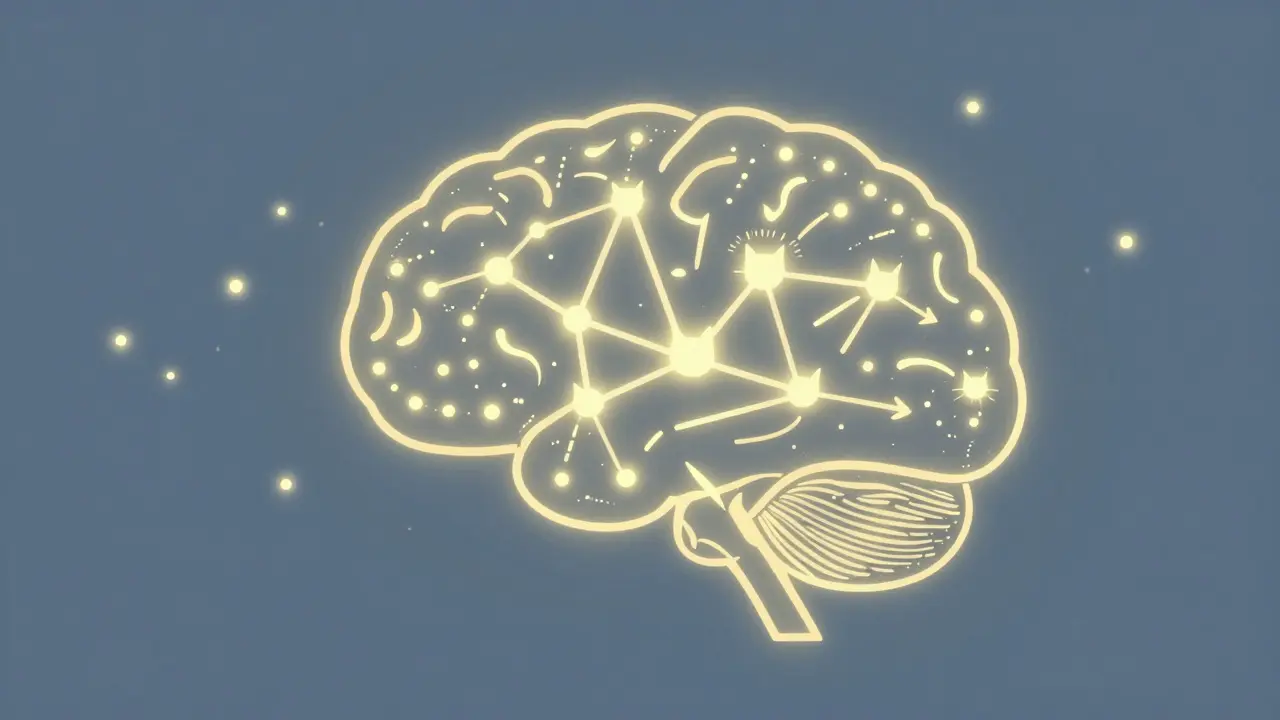
For example, if you want an AI to recognize cats in photos, you show it 10,000 pictures. Some have cats. Some don’t. The AI looks at pixels-shapes, colors, edges-and tries to guess whether a cat is there. After thousands of tries, it starts noticing that cats often have pointy ears, whiskers, and oval eyes. It doesn’t know what a cat is. It just knows which patterns usually mean "cat."
This is called machine learning. It’s the most common type of AI today. You don’t program rules like "if it has whiskers, it’s a cat." You feed it data and let it find the rules on its own.
There are different ways AI learns:
- Supervised learning: You give it labeled examples. Like showing photos tagged "cat" or "not cat."
- Unsupervised learning: You give it data without labels. The AI tries to find hidden patterns. Like grouping customers by buying habits without being told what to look for.
- Reinforcement learning: The AI learns by trial and error, getting rewards for good choices. Like a robot learning to walk by getting points for not falling over.
You don’t need to pick which type to use. Tools today do that for you. But knowing these exist helps you understand why AI sometimes makes weird mistakes.
Real Examples You Use Every Day
You’re already using AI more than you think. Here’s what it’s doing right now in your life:
- When your phone unlocks with your face-that’s AI recognizing your facial features.
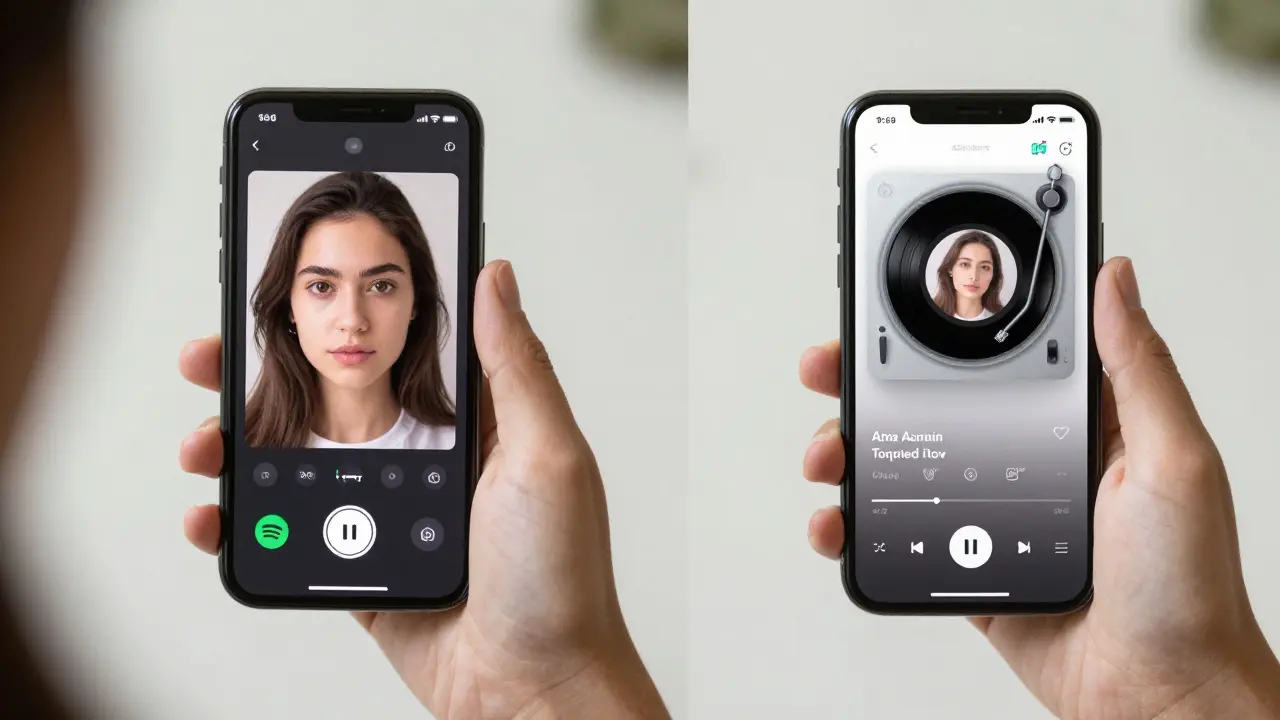
- When Spotify recommends a song you’ve never heard but love-that’s AI analyzing your listening habits and matching them to others with similar tastes.
- When Google Maps tells you traffic is bad ahead-that’s AI combining data from millions of phones to predict delays.
- When you type a message and your phone finishes your sentence-that’s AI predicting what you’ll say next based on billions of messages it’s seen.
- When you search for "how to fix a leaky faucet" and YouTube shows you a video that’s perfect-that’s AI matching your search to content based on what similar users clicked on.
These aren’t futuristic ideas. They’re running on your phone, your laptop, and the websites you visit every day. AI isn’t coming. It’s already here.
What AI Can’t Do (And Why That Matters)
AI is powerful, but it’s not perfect. And knowing its limits keeps you from getting fooled.
AI doesn’t understand context the way humans do. If you ask it to write a poem about grief, it can string together words that sound poetic. But it doesn’t feel sadness. It doesn’t know what loss means. That’s why AI-generated text can sound convincing but be completely wrong.
Here’s a common mistake: AI might say "The Eiffel Tower is in London." It’s not lying. It just saw that phrase in a lot of bad data and guessed it was true. That’s called hallucination. It’s when AI makes up facts that sound plausible but aren’t real.
AI also doesn’t know right from wrong. If you feed it biased data-like job applications where mostly men got hired-it will learn to prefer male candidates. That’s not because AI is sexist. It’s because the data it learned from was.
And AI can’t reason. It can’t ask "why?" It can’t question assumptions. It just finds the most likely answer based on what it’s seen. That’s why you should always double-check important info from AI tools.
How to Start Learning AI (Even If You’re Not a Programmer)
You don’t need to code to understand AI. But you do need to know how to use it wisely.
Here’s a simple path to get started:
- Use AI tools daily. Try ChatGPT, Gemini, or Claude. Ask them questions. See how they answer. Notice when they’re helpful and when they’re wrong.
- Learn one concept at a time. Don’t try to learn "deep learning" on day one. Start with "What is a neural network?" Then move to "How does image recognition work?"
- Watch short videos. YouTube channels like Two Minute Papers or CrashCourse AI break down complex ideas in under 5 minutes.
- Try no-code AI tools. Platforms like Teachable Machine (by Google) let you train an AI to recognize images or sounds without writing code. You upload photos of cats and dogs, click "train," and it learns to tell them apart.
- Ask "how was this made?" When you see an AI-generated image or article, wonder how it got there. That curiosity is the first step to real understanding.
You don’t need a degree. You don’t need to learn Python. You just need to stay curious.
What’s Next? The Real Impact of AI
AI is changing jobs-not by replacing people, but by changing what people do. A graphic designer doesn’t get fired because AI can make logos. They start using AI to generate 20 ideas in 10 minutes, then focus on picking the best one and making it better.
Doctors use AI to spot tumors in X-rays faster. Teachers use it to grade multiple-choice tests so they have more time to help students one-on-one.
The real skill isn’t knowing how AI works. It’s knowing how to work with it. That means asking better questions. Checking its answers. Knowing when to trust it and when to ignore it.
AI won’t make you obsolete. But someone who knows how to use AI will probably replace someone who doesn’t.
Common Myths About AI (Debunked)
Let’s clear up a few big misunderstandings:
- Myth: AI is self-aware. Truth: No AI has consciousness. It doesn’t know it exists.
- Myth: AI will take over all jobs. Truth: It automates tasks, not entire roles. Most jobs will change, not disappear.
- Myth: AI is too complicated for non-tech people. Truth: You use it every day. Understanding it is just about asking simple questions.
- Myth: AI is always accurate. Truth: It’s often wrong in subtle ways. Always verify.
- Myth: You need a computer science degree to work with AI. Truth: Many people use AI tools in marketing, writing, design, and education without coding at all.
AI is a tool. Like a calculator. Like a word processor. It doesn’t think. It doesn’t decide. It responds to what you ask. And you’re the one in charge.
Do I need to learn coding to understand AI?
No. You can understand how AI works, use it effectively, and even build simple projects without writing a single line of code. Tools like ChatGPT, Canva’s AI features, or Google’s Teachable Machine let you interact with AI through clicks and prompts. Coding helps if you want to build custom AI systems, but most people just need to know how to ask the right questions and check the answers.
Is AI dangerous?
AI itself isn’t dangerous. But how people use it can be. Biased AI can make unfair hiring decisions. Deepfakes can spread lies. AI-generated spam can trick people into giving up money. The risk isn’t the technology-it’s the lack of awareness. The best defense is learning how it works so you can spot misuse.
What’s the difference between AI and machine learning?
AI is the big idea: machines doing things that need human intelligence. Machine learning is one way to make that happen. It’s when AI learns from data instead of being programmed with rules. Think of AI as the goal and machine learning as one of the tools to get there. Other tools include rule-based systems and expert systems, but machine learning is the most common today.
Can AI create original content?
AI can combine existing patterns to create new text, images, or music that hasn’t been seen before. But it doesn’t have intent, emotion, or personal experience. So while it can write a poem that sounds moving, it doesn’t feel the sadness behind it. Originality in humans comes from lived experience. AI’s "originality" is just remixing what it’s seen.
How do I know if something was made by AI?
Look for these signs: overly perfect grammar, vague generalizations, repetition of phrases, or answers that sound smart but lack depth. AI often avoids taking strong opinions. It also struggles with real-time facts-like current events after its training cutoff. If something feels "too generic" or "too perfect," it might be AI-generated. Always check the source.
Final Thought: AI Is a Mirror
AI doesn’t have opinions. It doesn’t have biases. But it reflects the data it’s trained on-and that data comes from us. If we feed it lies, it learns lies. If we feed it fairness, it can help promote fairness. It’s not smarter than us. It’s just faster at copying what we’ve already done.
Understanding AI isn’t about becoming a tech expert. It’s about becoming a smarter user. The people who win with AI aren’t the ones who built it. They’re the ones who learned how to ask better questions, spot mistakes, and use it to make their work better.
You don’t need to fear it. You just need to understand it. And now, you already have.