Artificial Intelligence: The Future of Wine Making
Wine used to be made by instinct, experience, and seasons. Now, it’s made by data.
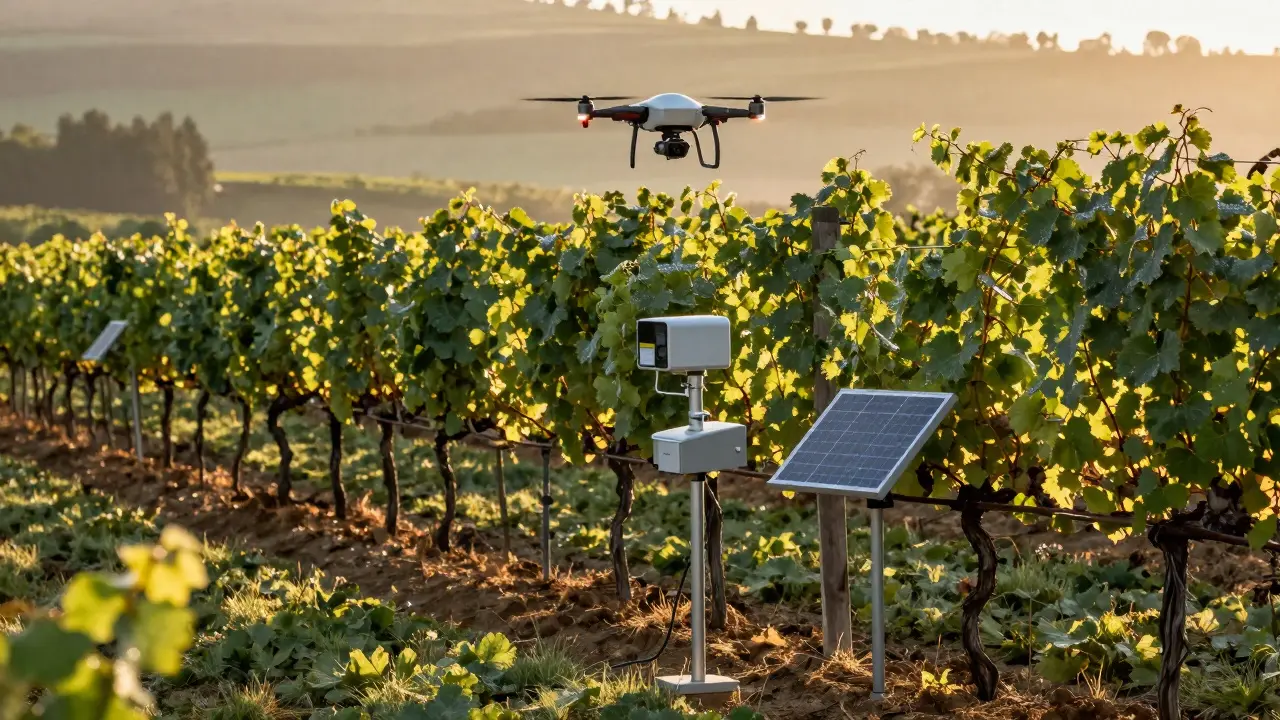
Walk into a vineyard in Napa, Bordeaux, or the Yarra Valley in 2026, and you won’t just see rows of vines. You’ll see sensors buried in the soil, drones hovering above the canopy, and AI systems predicting harvest dates down to the day. What was once an art shaped by generations of intuition is now a science powered by artificial intelligence. And it’s not replacing winemakers-it’s giving them superpowers.
For decades, winemakers relied on weather patterns, soil samples, and taste tests to decide when to pick grapes. Today, AI analyzes hundreds of variables-leaf moisture, sugar levels, fungal spore counts, even the sound of wind through vines-and tells them exactly what to do next. The result? Better wine, less waste, and vineyards that survive climate change.
How AI Reads the Vineyard
It starts with sensors. Tiny, solar-powered devices are planted in the ground around each vine. They measure things like soil pH, water content, and root temperature. These sensors send real-time data to the cloud. Meanwhile, drones with multispectral cameras fly over the vineyard every few days, capturing images invisible to the human eye. These images reveal which vines are stressed, which are thriving, and which might be hiding early signs of mildew.
That data flows into AI models trained on decades of harvest records. One system, developed by researchers at UC Davis and now used in over 200 vineyards, can predict grape ripeness with 94% accuracy-weeks before harvest. It doesn’t guess. It learns. It knows that a 0.3°C rise in nighttime temperature in late August means sugar levels will spike three days faster than usual. It knows that a patch of vines showing slightly lower chlorophyll levels in the drone images will produce grapes with higher tannins, perfect for aging.
This isn’t science fiction. In 2024, a winery in Barossa Valley used AI to delay harvesting by 11 days based on predicted acidity levels. The resulting Shiraz won international awards for balance and depth. The winemaker didn’t change a single pruning technique. He just listened to the data.
From Vine to Bottle: AI in the Cellar
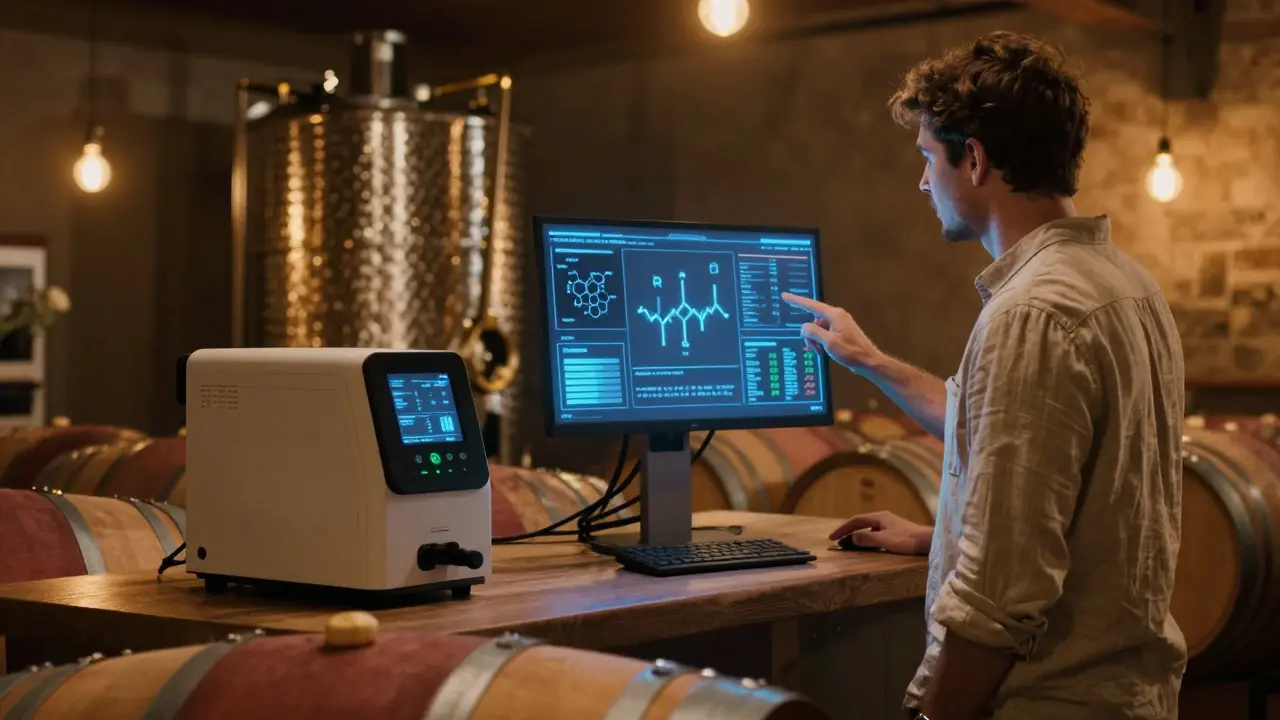
The magic doesn’t stop at harvest. In the winery, AI takes over monitoring fermentation. Traditional methods rely on daily taste tests and hydrometer readings. AI-powered systems now use infrared spectroscopy to track sugar-to-alcohol conversion in real time. If the yeast is lagging, the system adjusts temperature or nutrient levels automatically. If it detects off-flavor compounds forming, it alerts the winemaker before the batch is ruined.
One French winery, Château Margaux, started using AI to predict aging potential in 2023. By analyzing chemical signatures from thousands of past vintages, the AI can now tell which barrels of wine will mature into premium bottles-and which should be blended into entry-level wines. This reduced waste by 22% in its first year.
Even labeling and packaging are getting smarter. AI scans each bottle for color consistency, fill level, and cork integrity. A single defective bottle? The system flags it before it leaves the warehouse. No more customers opening a bottle only to find it’s corked.
Climate Change Is Forcing Innovation
Wine regions are feeling the heat-literally. In 2025, Australia’s wine industry faced its hottest summer on record. Yields dropped 18% in some areas. Traditional planting zones are shifting. Grapes that once thrived in Adelaide are now struggling. Meanwhile, cooler regions like Tasmania are seeing explosive growth in sparkling wine production.
AI is helping vineyards adapt. Machine learning models now simulate future climate scenarios based on global weather patterns. They tell growers: “Plant Pinot Noir on the north-facing slope, not the south. The soil there will stay cooler in 2030.” Or: “Switch to drought-resistant rootstock. Your current vines won’t survive two more dry seasons.”
At the University of Melbourne’s wine research center, scientists trained an AI on 40 years of regional climate data. The model now predicts which grape varieties will thrive in each microclimate over the next 20 years. It’s not just helping current winemakers-it’s guiding the next generation.
Who’s Using AI in Wine Right Now?
It’s not just big names. Small wineries are adopting AI faster than you’d think. Here are a few real examples:
- Stag’s Leap Wine Cellars (Napa) uses AI to optimize irrigation. Their water use dropped 30% without affecting flavor.
- Domaine de la Romanée-Conti (Burgundy) employs AI to map vine health across its 80-acre plot. They now prune only the vines that need it, saving labor and preserving terroir.
- Yellow Tail (Australia) uses AI to predict demand. By analyzing social media trends, weather forecasts, and retail sales, they adjust production before bottling-cutting overstock by 40%.
- Winery X (New Zealand) launched a consumer app in 2025. You take a photo of your bottle, and AI tells you the optimal drinking window, food pairings, and even the exact soil conditions from the vineyard.
These aren’t gimmicks. They’re survival tools. The global wine market is worth over $400 billion. But climate volatility, labor shortages, and shifting consumer tastes are making traditional methods risky. AI isn’t optional anymore-it’s essential.
The Human Touch Still Matters
Don’t get the wrong idea. AI isn’t making wine. Winemakers are. The technology doesn’t replace judgment-it enhances it. A machine can tell you that a batch has high acidity. But only a human can decide if that acidity will balance beautifully with the fruit, or if it’ll taste sharp and harsh.
At the end of the day, wine is about emotion. The smell of rain on warm earth. The way a glass of Cabernet feels in your mouth after a long day. AI can’t replicate that. But it can give you the best possible raw material to create it.
One veteran winemaker in McLaren Vale told me: “I’ve been doing this for 42 years. I used to rely on my hands, my nose, my gut. Now, I have a screen that tells me what my gut already knew. It just confirms it faster.”
What’s Next?
The next leap? AI that can design wines from scratch. Not just predict, but create. Some labs are training neural networks on thousands of wine profiles-aroma compounds, mouthfeel, aging curves-to generate entirely new flavor profiles. Imagine an AI that says: “Blend 60% Grenache from this block with 30% Syrah from that one, and 10% Viognier from the ridge. You’ll get a wine with notes of black plum, smoked herbs, and a lingering violet finish.”
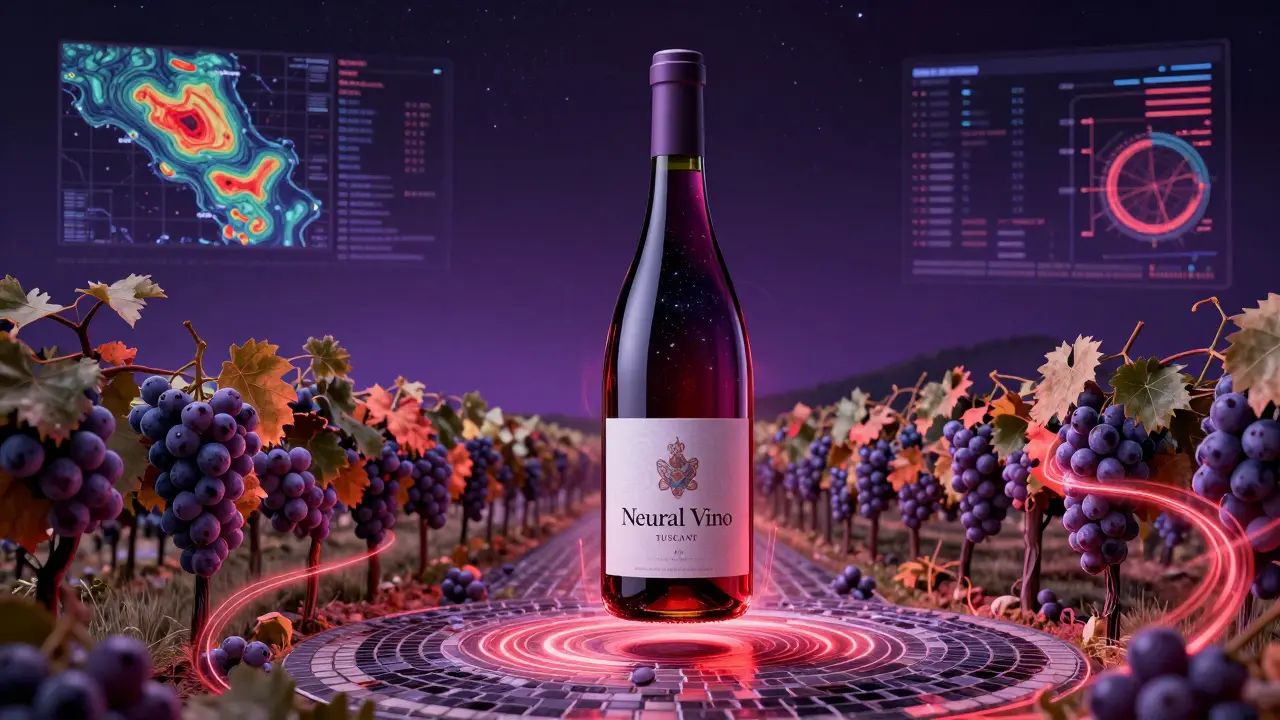
It’s already happening. In 2025, a startup in Tuscany released a wine called “Neural Vino”-the first to be entirely designed by AI. Critics gave it 93 points. It sold out in 72 hours.
Will AI make wine more uniform? Maybe. But it’s also making wine more precise, more sustainable, and more accessible. A small vineyard in the Hunter Valley can now compete with a century-old estate because they’re using the same tools.
The future of wine isn’t about robots replacing humans. It’s about humans using intelligence-artificial and natural-to make something better than ever before.
Can AI really improve wine quality?
Yes. AI doesn’t replace the winemaker’s palate, but it removes guesswork. By analyzing soil, climate, and grape chemistry in real time, AI helps harvest at peak ripeness, prevent disease outbreaks, and optimize fermentation. Wineries using AI report up to 30% fewer defects and higher scores from wine critics.
Is AI in winemaking only for big wineries?
No. Many AI tools are now affordable for small producers. Cloud-based platforms offer sensor kits for under $2,000, and drone analysis services cost less than $50 per flight. Some cooperatives even share AI systems across dozens of small vineyards. The tech is democratizing quality.
Does AI make wine taste the same everywhere?
Not at all. AI actually helps preserve uniqueness. By mapping microclimates and soil variations, it helps winemakers highlight what makes their region special. A Pinot Noir from Central Otago will still taste different from one in Burgundy-AI just ensures each one reaches its full potential.
Can AI predict wine trends?
Yes. AI scans social media, restaurant menus, and retail sales to spot rising preferences-like demand for low-alcohol wines or orange wines. Wineries use this to adjust grape planting and blending before the next harvest. In 2025, AI helped a California winery shift from Cabernet to Zinfandel after detecting a 40% surge in Gen Z interest.
Will AI replace winemakers?
No. AI handles data. Humans handle art. The best winemakers today are data-literate artists. They use AI to reduce risk, save time, and protect their vines-but they still decide when to pick, how to ferment, and what to blend. Technology doesn’t remove the soul of wine; it protects it.