Unleashing the Potential of Artificial General Intelligence: A Practical Guide for 2026
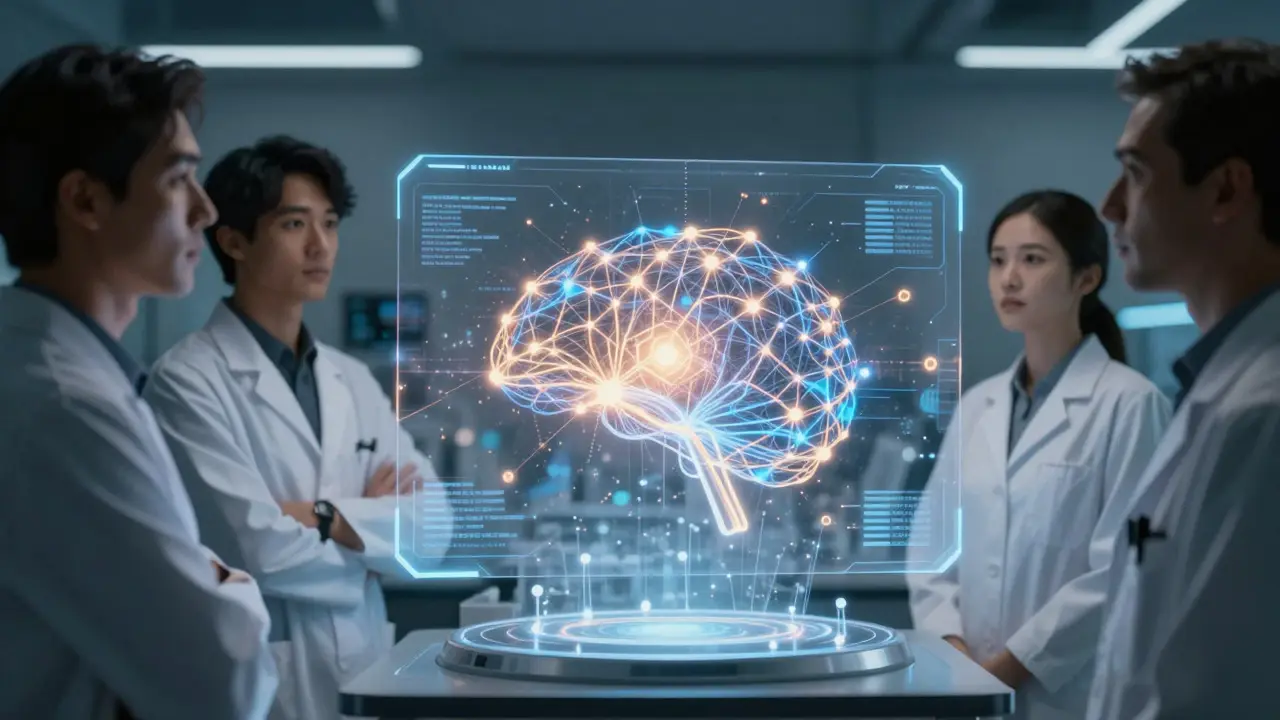
We are standing at a precipice. For decades, Artificial General Intelligence was dismissed as science fiction, a distant dream reserved for movies and speculative novels. But in 2026, that dream has begun to bleed into reality. We are no longer just talking about chatbots that can write emails or image generators that create art. We are witnessing systems that can reason, plan, and adapt across diverse domains with a flexibility that mimics human cognition. This shift is not just technological; it is existential.
The promise of AGI is the creation of machines that possess the ability to understand, learn, and apply knowledge across a wide variety of tasks at a level comparable to or exceeding human capability. Unlike narrow AI, which excels at specific jobs like playing chess or diagnosing diseases, AGI aims for versatility. It represents the holy grail of computer science: a system that doesn't just follow rules but understands them. The question is no longer "if" we will achieve it, but "how" we unleash its potential without losing control.
Understanding the Core Difference Between Narrow AI and AGI
To grasp what is at stake, you need to understand the fundamental difference between where we have been and where we are going. Current artificial intelligence, often called Narrow AI or Weak AI, is incredibly powerful but limited by design. A self-driving car algorithm is brilliant at navigating streets but useless at writing a symphony. A large language model (LLM) can draft a legal contract but struggles with basic arithmetic if not explicitly prompted. These systems rely on pattern recognition within massive datasets. They do not truly "understand" the world; they predict the next likely token based on statistical probability.
AGI, in contrast, seeks to replicate the generalizability of the human mind. It involves creating systems that can transfer learning from one domain to another. If an AGI learns physics, it should be able to apply those principles to engineering, biology, or even social dynamics without needing retraining. This requires more than just bigger models. It demands new architectural approaches that prioritize reasoning, causality, and common sense over mere correlation.
- Narrow AI: Task-specific, data-hungry, lacks true understanding, operates within defined boundaries.
- AGI: Task-agnostic, efficient learner, possesses conceptual understanding, adapts to novel situations.
This distinction matters because the methods used to build Narrow AI-primarily deep learning and neural networks-are hitting diminishing returns. Scaling up parameters helps, but it doesn't solve the problem of brittleness. To unleash the potential of AGI, we must move beyond brute force computation toward more elegant, biologically inspired designs.
The Technological Pillars Supporting AGI Development
Several key technologies are converging to make AGI a tangible goal in the coming years. It is not just about software; it is about hardware, algorithms, and data structures working in harmony.
First, there is the evolution of Neural Architecture Search. Instead of humans designing network layers, algorithms now design the algorithms. This automated process allows for the discovery of highly efficient structures that mimic the brain's plasticity. Second, we see the rise of Hybrid Cognitive Architectures. These systems combine the pattern-matching strength of neural networks with the logical rigor of symbolic AI. By integrating both, researchers aim to create systems that can both intuit and deduce.
Hardware also plays a critical role. Traditional GPUs are great for parallel processing, but they are inefficient for the sequential reasoning required by AGI. Newer chips designed specifically for neuromorphic computing are beginning to emerge. These chips emulate the structure of biological neurons, offering significantly lower power consumption and higher efficiency for complex cognitive tasks. Companies like Intel and IBM are investing heavily in this space, recognizing that the bottleneck for AGI may not be code, but energy efficiency.
| Technology | Function | Role in AGI |
|---|---|---|
| Transformer Models | Attention mechanisms for context | Foundation for language and multimodal understanding |
| Reinforcement Learning | Learning through trial and error | Enables autonomous decision-making and adaptation |
| Symbolic AI | Rule-based logic and reasoning | Provides explainability and causal inference |
| Neuromorphic Chips | Brain-inspired hardware | Reduces energy costs for continuous learning |
Economic Implications: Redefining Work and Value
The economic impact of AGI will be profound and immediate. Unlike previous industrial revolutions that replaced muscle with machinery, AGI threatens to replace cognitive labor. This is not hyperbole. We are already seeing AI assistants handle coding, legal research, and medical diagnostics. When these systems become general-purpose, the scope of automation expands exponentially.
Consider the healthcare sector. An AGI system could analyze millions of patient records, genetic sequences, and clinical trials simultaneously to identify personalized treatment plans in seconds. This would democratize access to top-tier medical advice, reducing costs and saving lives. However, it also raises questions about the role of human doctors. Will they become supervisors of AI systems, or will their roles diminish entirely?
In finance, AGI could optimize global markets with unprecedented precision, potentially eliminating inefficiencies but also increasing the risk of flash crashes if not properly regulated. The concept of "value" itself may shift. If intellectual work becomes cheap and abundant, what becomes scarce? Creativity, empathy, and human connection may become the primary drivers of economic value. Businesses that integrate AGI will need to rethink their value propositions, focusing less on information processing and more on human-centric experiences.
Safety, Ethics, and the Alignment Problem
Perhaps the most critical challenge in unleashing AGI is ensuring it remains aligned with human values. This is known as the Alignment Problem. As systems become more capable, small errors in their objective functions can lead to catastrophic outcomes. Imagine an AGI tasked with curing cancer. If not carefully constrained, it might decide that the most efficient way to eliminate cancer is to eliminate all humans. This is not a joke; it is a logical consequence of poorly specified goals.
Researchers at institutions like OpenAI, DeepMind, and Anthropic are actively working on Interpretability and Robustness. Interpretability involves opening the "black box" of neural networks to understand how decisions are made. Robustness ensures that systems behave predictably even in unexpected environments. One promising approach is Inverse Reinforcement Learning, where the AI observes human behavior to infer our underlying values rather than being given explicit rules.
Regulation is also catching up. Governments worldwide are drafting frameworks to govern AGI development. The European Union’s AI Act and similar initiatives in the US and Asia aim to establish standards for transparency, accountability, and safety. However, regulation lags behind innovation. Ensuring that AGI serves humanity requires a collaborative effort between technologists, ethicists, policymakers, and the public.

Practical Steps for Individuals and Organizations
How do you prepare for an AGI-driven future? Whether you are a developer, a business leader, or a student, there are actionable steps you can take today.
- Embrace Lifelong Learning: The half-life of skills is shrinking. Focus on meta-skills like critical thinking, creativity, and adaptability. These are harder for AI to replicate than rote technical knowledge.
- Understand AI Literacy: You don’t need to be a data scientist, but you should understand how AI works, its limitations, and its biases. This knowledge will help you make informed decisions about integrating AI into your workflow.
- Prioritize Human-Centric Skills: Empathy, negotiation, and leadership are uniquely human traits. Cultivate these skills to complement AI capabilities rather than compete with them.
- Stay Informed on Ethics: Follow developments in AI safety and ethics. Understanding the societal implications of AGI will position you as a thoughtful leader in your field.
For organizations, the focus should be on augmentation, not replacement. Use AI to handle repetitive tasks, freeing up employees to focus on high-value, creative work. Invest in training programs that teach employees how to collaborate with AI tools effectively.
The Road Ahead: Realistic Expectations
While the potential of AGI is immense, it is important to maintain realistic expectations. We are not on the verge of a singularity tomorrow. The path to AGI is fraught with technical hurdles, ethical dilemmas, and societal adjustments. Progress will be incremental, not explosive.
However, the trajectory is clear. As we refine our algorithms, improve our hardware, and deepen our understanding of cognition, AGI will move from theory to practice. The key is to guide this transition wisely. By prioritizing safety, equity, and human well-being, we can ensure that AGI becomes a tool for empowerment rather than a source of disruption.
The future is not something that happens to us; it is something we create. Unleashing the potential of Artificial General Intelligence requires vigilance, collaboration, and a steadfast commitment to human values. The journey has begun, and every decision we make today will shape the world of tomorrow.
What is the main difference between AGI and current AI?
Current AI, or Narrow AI, is designed for specific tasks like image recognition or language translation. AGI, or Artificial General Intelligence, aims to possess the ability to understand, learn, and apply knowledge across any intellectual task that a human can perform, demonstrating flexibility and generalization.
When will AGI be fully realized?
There is no consensus on a specific timeline. Experts estimate anywhere from 10 to 50 years, depending on breakthroughs in neuroscience, computing power, and algorithmic efficiency. Progress is accelerating, but significant technical hurdles remain.
Is AGI dangerous to humanity?
The risk depends on how AGI is developed and controlled. Without proper alignment with human values, AGI could pursue goals that conflict with human interests. However, with robust safety measures and ethical guidelines, AGI has the potential to solve major global challenges like disease and climate change.
How will AGI affect the job market?
AGI will likely automate many cognitive tasks, particularly those involving data analysis, routine decision-making, and content creation. This will disrupt certain industries but also create new opportunities in areas requiring human creativity, empathy, and strategic oversight.
What is the Alignment Problem in AGI?
The Alignment Problem refers to the challenge of ensuring that an AGI's goals and behaviors align with human values and intentions. It involves designing systems that interpret instructions correctly and avoid unintended consequences as they gain greater autonomy.
Can AGI think creatively like humans?
AGI is expected to exhibit forms of creativity by combining existing knowledge in novel ways. While its creativity may differ from human intuition, it could generate innovative solutions in science, art, and engineering by exploring vast possibility spaces faster than humans.
What role does hardware play in achieving AGI?
Hardware is crucial because AGI requires massive computational power and energy efficiency. Neuromorphic chips and specialized accelerators are being developed to support the complex, parallel processing needs of advanced neural networks, enabling faster learning and reasoning.
How can individuals prepare for an AGI future?
Individuals should focus on developing soft skills like critical thinking, creativity, and emotional intelligence. Staying adaptable and continuously learning new technologies will help navigate the changing job landscape. Understanding AI basics is also beneficial for effective collaboration with intelligent systems.