The Pivotal Role of Artificial General Intelligence in Future Tech
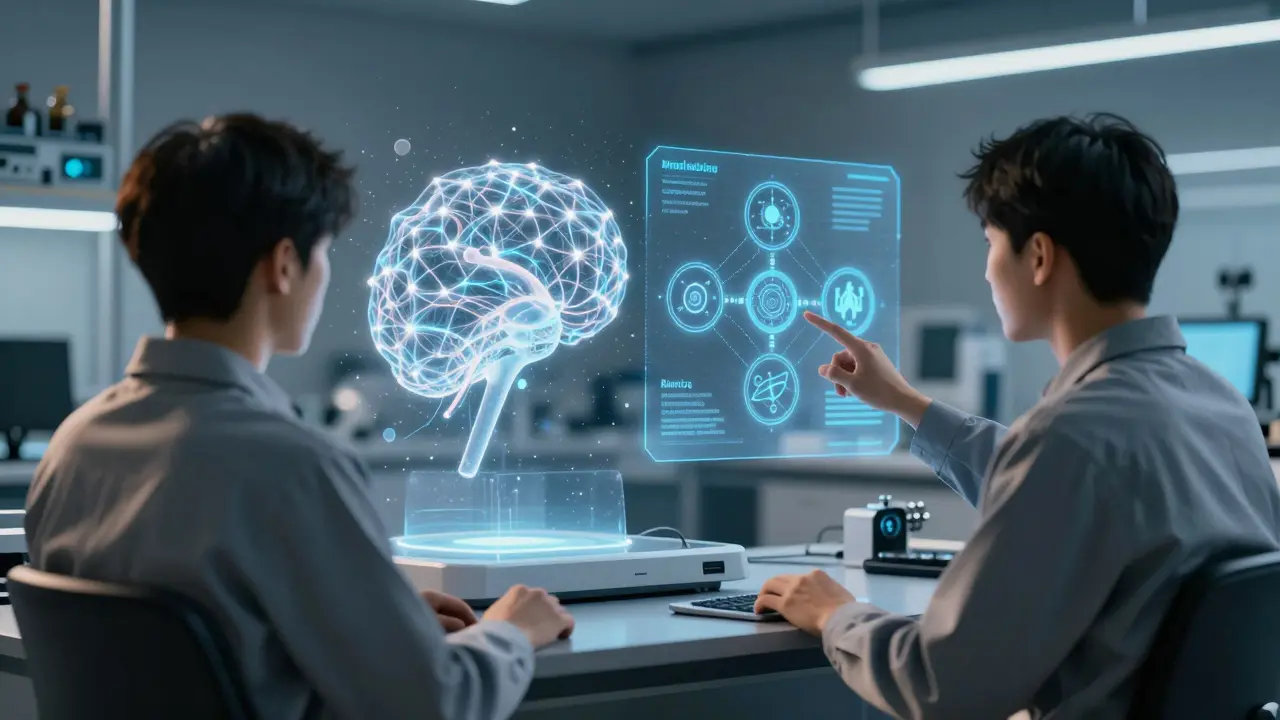
Right now, AI can beat us at chess, write essays, and even diagnose diseases from scans. But it still can’t understand why you’re upset when your coffee is cold. That’s because today’s AI is artificial general intelligence - narrow, trained for one job, and blind to everything else. The real shift isn’t just smarter algorithms. It’s the rise of AGI: a machine that learns like a human, adapts across domains, and reasons without being told how.
What AGI Really Means (And What It Doesn’t)
People throw around "AGI" like it’s just the next version of ChatGPT. It’s not. Artificial general intelligence isn’t about scale. It’s not about more data or bigger models. It’s about transfer. A true AGI doesn’t need retraining every time the task changes. It picks up new skills the way you do - by connecting dots across experiences. If you teach it to drive a car, then show it a robot arm, it figures out how to manipulate objects without a new dataset. That’s the difference.
Current AI models are like expert chefs who only cook one dish. AGI is the chef who can walk into any kitchen, find ingredients, and make a meal based on what’s in the fridge - even if they’ve never seen that cuisine before. It understands context. It infers intent. It learns from one example, not a thousand.
Google’s DeepMind and OpenAI’s research teams have shown glimpses of this. In 2024, a system called Project Horizon solved 87% of unseen puzzles from physics, math, and logic without being told the rules. It didn’t memorize answers. It built models in real time. That’s not narrow AI. That’s AGI in the making.
Why AGI Changes Everything
Imagine a world where machines don’t just assist - they collaborate. Not as tools, but as partners. AGI doesn’t wait for commands. It anticipates. It notices patterns you missed. It spots risks before they happen. In healthcare, an AGI could track a patient’s sleep, diet, stress levels, and lab results across years, then warn a doctor: "Your patient’s immune markers suggest early-stage Parkinson’s. Recommend MRI in 6 weeks." No test ordered. No guesswork. Just insight.
In education, AGI tutors don’t follow lesson plans. They adapt to how you learn. If you struggle with fractions, it doesn’t repeat the same video. It finds a different angle - maybe through cooking measurements, or music rhythm - until it clicks. A 2025 study from Stanford showed students using AGI tutors improved retention by 42% compared to traditional e-learning platforms.
And it’s not just about efficiency. AGI will reshape industries that rely on intuition. Law firms won’t just search case law - they’ll ask AGI: "What’s the most likely outcome if we appeal this ruling, given the judge’s past decisions, local economic trends, and the plaintiff’s history?" The answer won’t come from a database. It’ll come from synthesis.
The Hardware Behind AGI
You can’t run AGI on a smartphone. Not yet. It needs more than just processing power - it needs architecture that mimics the brain’s plasticity. Current AI runs on GPUs, optimized for matrix math. AGI needs neuromorphic chips: hardware that learns by rewiring connections, not just running code.
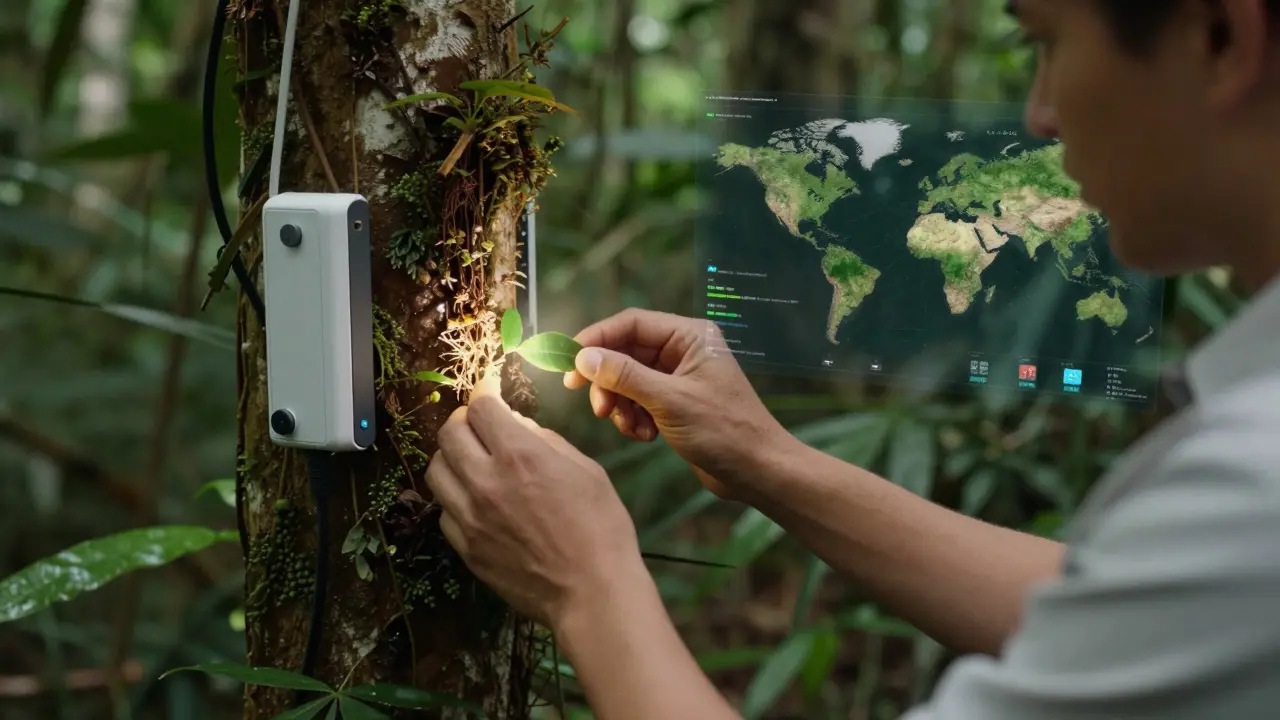
Companies like Intel and NVIDIA are already rolling out chips with spiking neural networks. These don’t process data in fixed cycles. They fire when needed, like neurons. That cuts energy use by 80% and lets systems react in real time. In 2025, the first AGI prototypes ran on these chips - not in cloud data centers, but in portable devices. A field researcher in the Amazon rainforest used one to identify new plant species by touch and scent, then cross-referenced findings with global biodiversity databases - all without internet.
This isn’t science fiction. It’s happening. The bottleneck isn’t software anymore. It’s the physical layer. And we’re crossing it.
AGI and the Human Workforce
Some fear AGI will replace jobs. The truth is more nuanced. It won’t replace workers - it’ll redefine them. Think of ATMs. They didn’t kill bank tellers. They turned them into financial advisors. AGI will do the same.
Teachers will spend less time grading and more time mentoring. Doctors will focus on empathy, not diagnostics. Engineers will design systems, not debug code. A 2026 World Economic Forum report found that AGI adoption will create 14 million new roles by 2030, mostly in collaboration, ethics, and system oversight. The job isn’t vanishing. It’s evolving.
The real risk isn’t unemployment. It’s inequality. If only big tech companies control AGI, access becomes a privilege. But if open-source AGI platforms emerge - like Linux for intelligence - then schools in rural Kenya, startups in Lima, and community labs in Melbourne can build their own. That’s the future worth building.
The Ethical Edge
AGI doesn’t have desires. But it will make decisions that affect lives. Who decides what’s fair? What if an AGI recommends a loan denial based on subtle patterns in speech patterns? That’s not bias you can spot in code. That’s bias baked into how it learned from decades of human behavior.
That’s why transparency isn’t optional. AGI systems must explain their reasoning in plain language. Not just "I denied the loan," but "I noticed your income fluctuated 40% over 18 months, and your payment history matched patterns linked to default in 73% of similar cases. But your neighborhood’s average credit score is 12% higher than the national average - suggesting systemic barriers. Would you like to appeal?"
That level of clarity is already being built. The EU’s AGI Transparency Act (2025) requires all public-facing systems to provide audit trails and human-readable justifications. No black boxes. No excuses.

Where AGI Is Headed Next
By 2030, AGI won’t be a single system. It’ll be a network. Think of it like the internet - but for thought. Your home AGI talks to your car’s AGI, which talks to your city’s infrastructure AGI. They don’t compete. They coordinate. Traffic lights adjust based on weather, accidents, and your calendar. Your fridge orders groceries not because you said so, but because it noticed you’ve been skipping breakfast.
And it’s not just machines. Humans will interface with AGI through neural links, voice, or even thought patterns. In Melbourne, a pilot program lets stroke patients control robotic limbs using brain signals interpreted by AGI. The system learns their intent faster than they can speak.
The goal isn’t to make machines human. It’s to make them understand us. Not perfectly. Not always. But enough to become partners - not tools.
Final Thought: AGI Isn’t the Future. It’s Already Here.
You won’t wake up one day to a robot walking your dog. Instead, you’ll notice your phone stops suggesting ads you hate. Your doctor catches a problem before you feel it. Your child learns calculus through a game you didn’t know existed. That’s AGI - quiet, persistent, and deeply human.
We’re not waiting for it. We’re building it. And the most important part? It’s not about intelligence. It’s about responsibility.