The Essential Role of Coding in AI: Why Algorithms Still Matter

Here is a hard truth that often gets lost in the hype: coding for ai is not just about writing lines of code; it is about building the logic that allows machines to learn. Many people think that because we have high-level libraries like TensorFlow or PyTorch, the actual coding aspect has disappeared. It hasn't. In fact, the gap between a mediocre model and a production-ready system is almost entirely filled by clean, efficient, and well-structured code.
If you are looking at AI as a black box where you just feed data and get results, you are missing the engine room. That engine room is built on standard programming principles, optimized mathematics, and rigorous data handling. Without solid coding skills, your AI project is just a science experiment that will break the moment real-world data hits it.
The Foundation: Python and Core Logic
When we talk about the role of coding in AI, Python is the dominant language used for developing artificial intelligence applications due to its readability and extensive library support. But why Python? It isn't the fastest language. C++ or Rust might be faster for raw computation, but Python strikes a balance between developer speed and performance that is hard to beat for prototyping and even many production systems.
Coding in this context means more than just syntax. It involves understanding how memory works, how loops affect execution time, and how to structure classes so that your models can be easily extended. For example, when building a custom layer in a neural network, you aren't just defining weights; you are writing functions that define how gradients flow back through the network during training. If your code is messy, debugging those gradient flows becomes a nightmare.
- Data Structures: Efficient use of lists, dictionaries, and arrays determines how quickly your model processes batches of data.
- Error Handling: Real-world data is dirty. Your code needs robust try-except blocks to handle missing values without crashing the entire pipeline.
- Modularity: Separating data loading, model definition, and evaluation into distinct modules makes testing significantly easier.
From Data to Model: The Preprocessing Pipeline
A huge portion of "AI coding" actually happens before the model sees a single number. This is where the magic (or the pain) lies. You need to write scripts that clean, normalize, and transform raw data into tensors that a machine can understand.
Imagine you are building a recommendation engine. The raw data might come from SQL databases, CSV files, and API responses. Your code has to harmonize these sources. This requires writing custom parsers, handling date formats, and encoding categorical variables. These tasks don't require deep math, but they require precise logic. A single bug in your normalization step can skew your entire dataset, leading to a model that performs great on test sets but fails in production.
This is where specific tools come into play. Libraries like Pandas is a powerful data manipulation and analysis library for Python that provides data structures like DataFrames. allow you to manipulate large datasets efficiently. However, knowing *when* to use vectorized operations versus explicit loops is a critical coding skill that separates beginners from professionals.
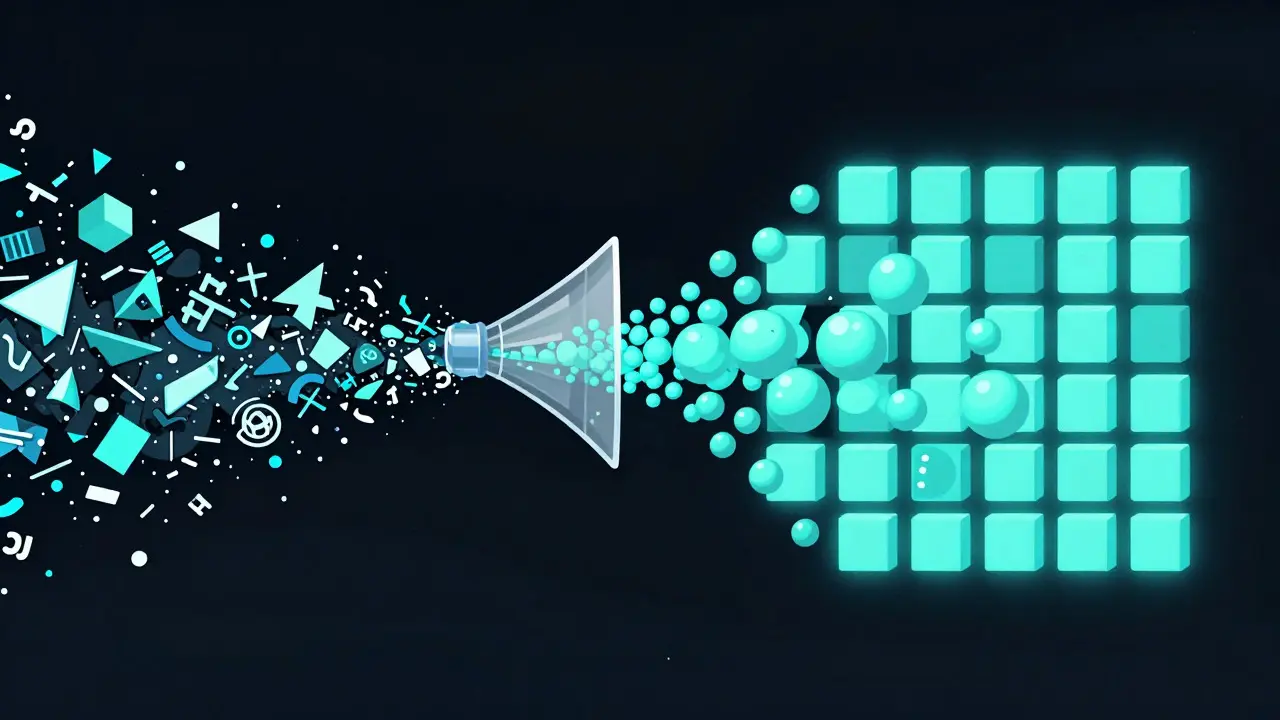
Building the Neural Network Architecture
Now we get to the core of the machine learning model. Whether you are using TensorFlow is an open-source software library for numerical computation widely used for machine learning. or PyTorch, you are still writing code that defines the architecture of the brain.
Choosing the right architecture is a coding decision. Do you need a Convolutional Neural Network (CNN) for image processing? Or a Recurrent Neural Network (RNN) for sequential data? Each choice changes the shape of your data and the complexity of your code. When you define a model, you are essentially creating a graph of operations. Every node in that graph is a function you either wrote yourself or pulled from a library.
Consider the loss function. While common ones like Mean Squared Error are built-in, sometimes you need a custom loss function to penalize specific types of errors more heavily. Writing that custom function requires a clear understanding of tensor operations and automatic differentiation. If your code doesn't handle edge cases correctly-like division by zero-the training process might diverge, sending your loss to infinity.
Optimization and Performance Tuning
Writing code that works is only half the battle. Writing code that runs fast is what makes an AI solution viable. This is where optimization techniques become essential. You need to profile your code to find bottlenecks. Is the CPU waiting for the GPU? Is data loading slow?
Techniques like mixed-precision training, where you use 16-bit floating-point numbers instead of 32-bit, can drastically reduce memory usage and increase speed. But implementing this correctly requires careful coding to ensure numerical stability. If you just flip a switch without checking your gradients, you might end up with NaNs (Not a Number) in your output.
| Phase | Primary Coding Task | Key Skill Required |
|---|---|---|
| Data Preparation | Cleaning and Transforming | Pandas proficiency, Regex |
| Model Definition | Architectural Design | Understanding Tensor Flow, OOP |
| Training | Optimizer Configuration | Numerical Stability, Debugging |
| Deployment | Inference Optimization | API Design, Latency Management |

Debugging the Invisible
Debugging in AI is different from traditional software development. In a web app, if a button doesn't work, you check the event listener. In AI, if the model predicts poorly, the problem could be in the data, the architecture, the hyperparameters, or the code itself.
This requires a specific type of coding mindset. You need to instrument your code to log intermediate values. Are the activations exploding? Are the weights updating? By adding print statements or using visualization tools, you turn the invisible internal state of the model into visible data. This is pure coding work. It’s about creating observability within complex mathematical systems.
Deployment: Where Code Meets Reality
The final stage is deployment. A model sitting in a Jupyter Notebook is useless to a business. To make it useful, you need to wrap it in an API. This usually involves frameworks like FastAPI or Flask. Here, coding focuses on latency, concurrency, and resource management.
You might need to convert your PyTorch model to ONNX format for faster inference on different hardware. You might need to write Docker containers to ensure consistency across environments. These are all coding tasks that have nothing to do with the math of machine learning, yet they determine whether your AI solution succeeds or fails in the real world.
Do I need to know C++ to work in AI?
Not necessarily. Python is sufficient for most application-level AI development. However, if you want to optimize low-level kernels or work on hardware-specific accelerators, C++ knowledge is highly beneficial. For 90% of data scientists and ML engineers, strong Python skills are the priority.
Is coding more important than math in AI?
They are two sides of the same coin. Math tells you *what* to do, while coding tells you *how* to do it efficiently. You can understand the theory of backpropagation perfectly, but if you can't implement it correctly in code, you have no working model. Both are essential, but coding is the bridge to implementation.
What is the hardest part of coding for AI?
Debugging non-deterministic issues. Because AI models rely on random initialization and stochastic optimization, bugs can appear intermittently. Isolating whether a failure is due to a code error, a data issue, or a hyperparameter misconfiguration requires systematic testing and logging.
Can no-code tools replace coding in AI?
No-code tools are great for quick prototypes and simple tasks. However, for custom architectures, unique data pipelines, or high-performance requirements, coding remains indispensable. No-code platforms often hit a ceiling once your problem becomes too specific or complex.
Which framework should I start with?
PyTorch is generally recommended for beginners and researchers due to its dynamic computation graphs and ease of debugging. TensorFlow is also powerful and has strong deployment tools. Choose based on community support and your specific project needs, but focus on the concepts rather than the specific syntax initially.