Coding for AI in 2026: How to Build the Future of Tech
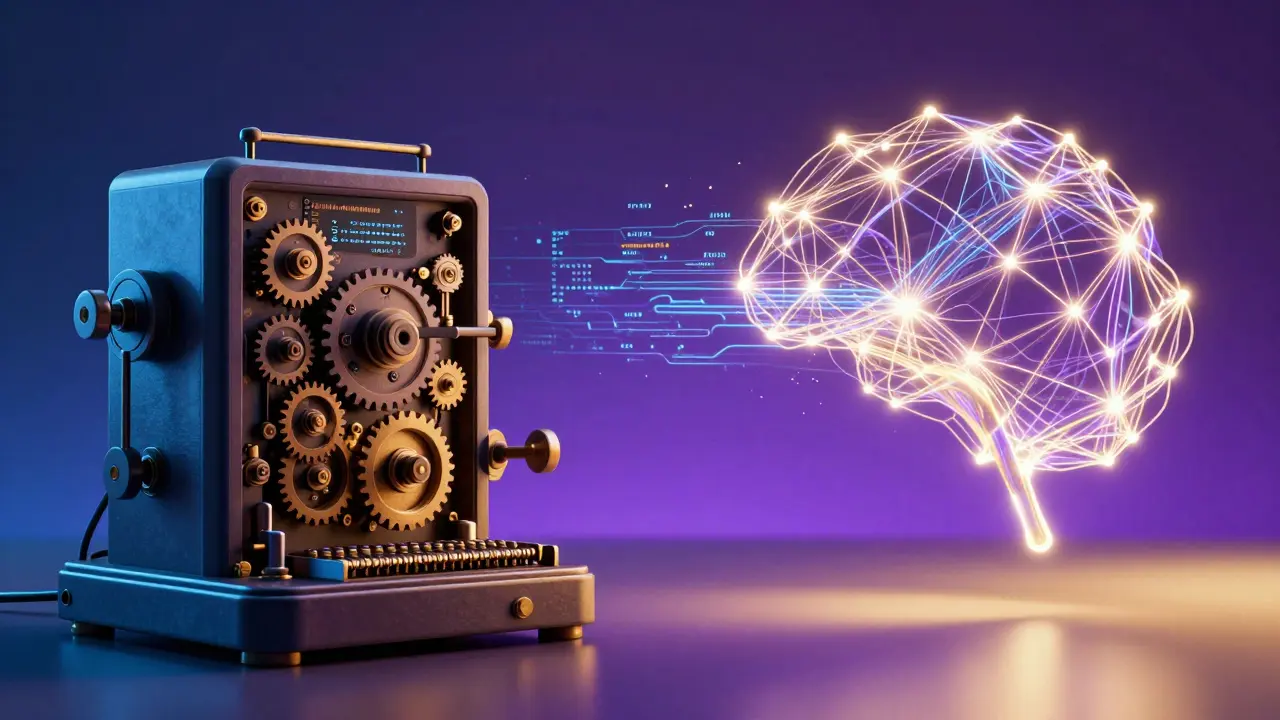
Remember when coding meant writing strict instructions for a computer to follow? If you told it to sort a list, it sorted a list. It didn't ask why. It didn't guess. In 2026, that world feels like ancient history. Today, Coding for AI is the practice of building systems that learn from data rather than following rigid rules. This shift isn't just a trend; it's the new baseline for software development. Whether you are a veteran developer or someone just starting out, understanding how to build intelligent systems is no longer optional-it’s essential.
The landscape has changed dramatically. We aren't just typing commands anymore. We are teaching machines to recognize patterns, predict outcomes, and make decisions. This guide breaks down what it actually takes to code for artificial intelligence today, moving past the hype into practical, actionable steps you can take right now.
Why Traditional Coding Fails in an AI World
To understand where we are going, we need to look at where we came from. Traditional programming is deterministic. You write an algorithm: if X happens, do Y. It works perfectly for calculators, file management, and simple web forms. But life is messy. Human language is ambiguous. Images vary in lighting and angle. Customer behavior is unpredictable.
Machine Learning is a subset of AI that enables computers to learn from data without being explicitly programmed for every scenario. Instead of hard-coding rules for every possible variation of a handwritten digit, you feed the system thousands of examples. The system finds the patterns itself. This is the core difference. In traditional coding, you provide the logic. In AI coding, you provide the data and the structure, and the machine provides the logic.
This shift changes your role as a developer. You stop being a dictator who gives orders and start being a teacher who designs curriculum. You focus less on syntax and more on data quality, model architecture, and evaluation metrics. If your data is biased, your AI will be biased. No amount of clever coding fixes bad data.
The Core Pillars of AI Development in 2026
You don’t need to know everything to start, but you do need a solid foundation. Here are the non-negotiable pillars of modern AI development:
- Data Literacy: Understanding how to clean, preprocess, and analyze datasets. Garbage in, garbage out remains the golden rule.
- Python Proficiency: While other languages exist, Python dominates the AI ecosystem due to its libraries and community support.
- Mathematical Intuition: You don’t need a PhD in calculus, but you must understand linear algebra, statistics, and probability to debug models effectively.
- Model Architecture: Knowing when to use a decision tree versus a neural network, or when to leverage pre-trained Large Language Models (LLMs).
In 2026, the barrier to entry has lowered because tools have gotten better, but the ceiling has risen because expectations are higher. Users expect AI that understands context, not just keywords. This means developers must focus heavily on Natural Language Processing is the technology that allows computers to understand, interpret, and generate human language. (NLP) and computer vision.
Python: The Universal Language of AI
If you are picking up one language to code for AI, make it Python. It’s not just popular; it’s the industry standard. Why? Because of its ecosystem. Libraries like PyTorch is an open-source machine learning framework developed by Meta, widely used for deep learning research and production. and TensorFlow allow you to build complex neural networks with relatively few lines of code. Pandas lets you manipulate data structures efficiently. Scikit-learn provides ready-to-use algorithms for classification and regression.
Here is a simple example of how much easier Python makes things. To train a basic image classifier, you might write fifty lines of code using PyTorch. In C++ or Java, that same task could require hundreds of lines, managing memory manually and dealing with complex object-oriented structures. Python abstracts away the heavy lifting so you can focus on the logic of the model.
| Framework | Best For | Learning Curve | Community Support |
|---|---|---|---|
| PyTorch | Research, Dynamic Graphs | Medium | Very High |
| TensorFlow | Production, Scalability | Steep | High |
| Hugging Face Transformers | NLP, Pre-trained Models | Low | Extremely High |
| Scikit-learn | Traditional ML, Data Analysis | Low | High |

From Scratch to Fine-Tuning: The Modern Workflow
A few years ago, building an AI model meant training it from scratch. That required massive amounts of data and expensive GPU clusters. Today, the workflow is different. Most developers start with Transfer Learning is a technique where a model developed for one task is reused as the starting point for a model on a second task.. You take a pre-trained model-like BERT for text or ResNet for images-and fine-tune it on your specific dataset.
This approach saves time and resources. Imagine trying to teach someone to drive. You wouldn’t start by explaining how the engine works. You’d put them in a car they already know how to operate and teach them local traffic laws. Similarly, fine-tuning a Large Language Model (LLM) on your company’s customer service logs creates a specialized bot faster than training a generic chatbot from zero.
The key skill here isn’t just calling an API. It’s knowing how to curate the fine-tuning dataset. If you fine-tune a model on noisy, inconsistent data, the results will be hallucinated or irrelevant. Spend 80% of your time on data preparation and only 20% on the actual coding of the model architecture.
Ethics and Responsibility in Code
As AI becomes more integrated into daily life, the ethical implications of your code grow. Bias in hiring algorithms, privacy concerns in facial recognition, and misinformation generated by LLMs are real problems. As a developer, you are responsible for mitigating these risks.
This means implementing guardrails. It means testing your models for disparate impact across different demographic groups. It means designing systems that are transparent about their limitations. When an AI denies a loan application, can it explain why? If not, it shouldn’t be used in high-stakes decisions. Ethical coding isn’t a separate module; it’s woven into the development lifecycle. Use tools like IBM’s AI Fairness 360 or Google’s What-If Tool to audit your models before deployment.
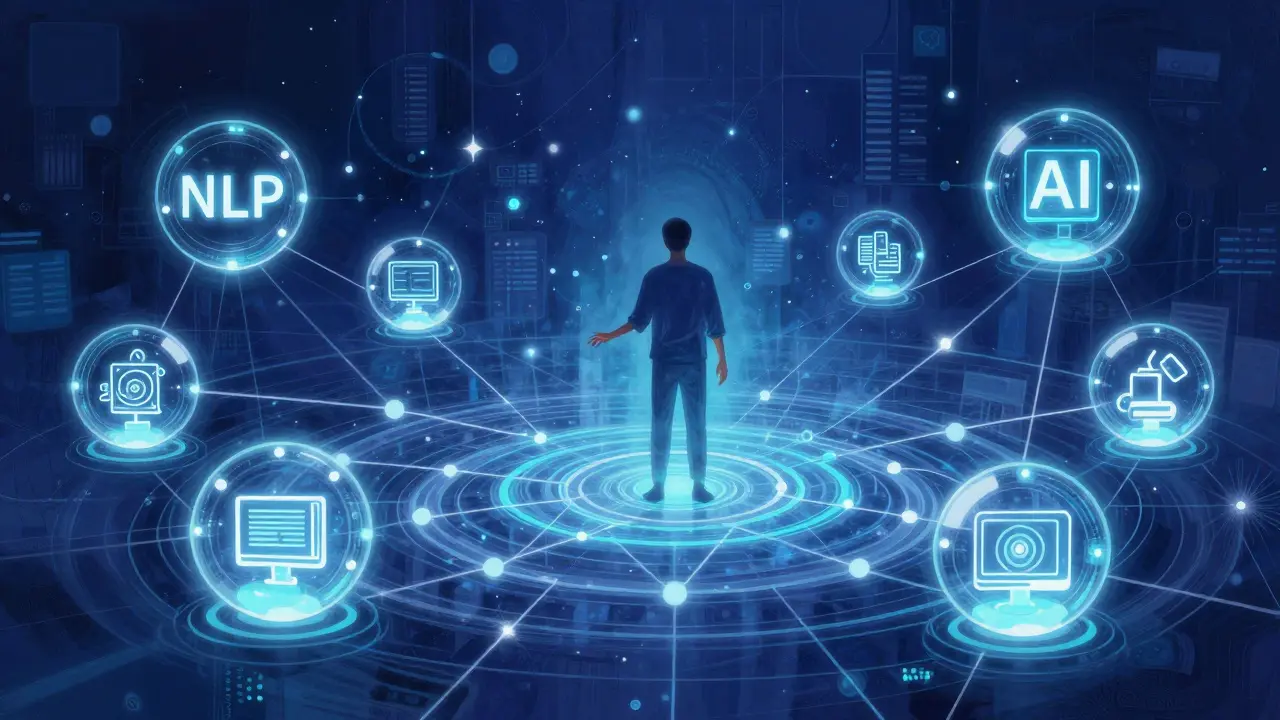
Tools That Accelerate Your Journey
You don’t have to reinvent the wheel. The AI community has built incredible tools that speed up development:
- Jupyter Notebooks: Ideal for exploratory data analysis and sharing code with visualizations.
- Weights & Biases: Tracks experiments, helping you compare model performance over time.
- Docker: Ensures your AI environment runs consistently across different machines.
- Kubernetes: Scales your AI applications in production environments.
For beginners, I recommend starting with Google Colab. It provides free access to GPUs, so you can run heavy computations without buying expensive hardware. Once you move to production, consider cloud providers like AWS SageMaker or Azure Machine Learning, which offer managed services that handle infrastructure scaling for you.
Building Your First AI Project: A Step-by-Step Guide
Let’s put theory into practice. Here is a simple roadmap to build your first predictive model:
- Define the Problem: Are you predicting house prices (regression) or classifying emails as spam (classification)? Be specific.
- Gather Data: Find a dataset on Kaggle or Hugging Face Datasets. Ensure it’s clean and relevant.
- Preprocess Data: Handle missing values, normalize numerical features, and encode categorical variables using Pandas and Scikit-learn.
- Choose a Model: Start simple. Try a Random Forest or Logistic Regression before jumping to Neural Networks.
- Train and Evaluate: Split your data into training and testing sets. Measure accuracy, precision, recall, and F1 score.
- Iterate: If the model performs poorly, check for overfitting or underfitting. Adjust hyperparameters or gather more data.
This process teaches you the fundamentals. Once you master this loop, you can apply it to more complex tasks like natural language processing or computer vision.
The Future: Where Do We Go From Here?
We are standing on the brink of Artificial General Intelligence is a hypothetical type of AI that possesses the ability to understand, learn, and apply knowledge across a wide range of tasks at a level comparable to humans. (AGI). While true AGI remains theoretical, current models are getting closer to general-purpose reasoning. This means developers will increasingly work on systems that can adapt to new tasks without retraining.
The role of the coder is evolving into that of an AI orchestrator. You will manage multiple models, ensuring they work together seamlessly. You will focus on integration, user experience, and ethical oversight. The technical barriers are lowering, but the strategic importance of AI is rising. Companies that leverage AI effectively will dominate their markets. Those that ignore it will fall behind.
Start small. Learn Python. Play with data. Build something broken, then fix it. The journey into the future of tech begins with your first line of code.
Do I need a math degree to code for AI?
No, you do not need a formal math degree. However, you do need a strong intuition for statistics, linear algebra, and calculus. Many successful AI developers are self-taught in these areas through online courses and practical application. Focus on understanding concepts like gradients, probabilities, and matrix operations rather than proving theorems.
Is Python the only language for AI development?
While Python is the dominant language due to its rich ecosystem of libraries like PyTorch and TensorFlow, other languages are gaining traction. Julia is known for its speed in scientific computing, and R is popular in statistical analysis. JavaScript frameworks like TensorFlow.js allow for browser-based AI. However, for most professional roles, Python remains the primary requirement.
How long does it take to learn AI coding?
It depends on your background. If you are already a proficient programmer, you can grasp the basics of machine learning in 3-6 months of dedicated study. Mastering deep learning and deploying production-grade models may take 1-2 years. Consistent practice and building real-world projects are more important than passive learning.
What is the difference between Machine Learning and Deep Learning?
Machine Learning (ML) is a broad field where algorithms learn from data. Deep Learning (DL) is a subset of ML that uses neural networks with many layers (hence "deep") to model complex patterns. DL excels in unstructured data like images, audio, and text, while traditional ML often performs well on structured tabular data.
Can I build AI models without expensive hardware?
Yes. Cloud platforms like Google Colab, Kaggle Notebooks, and AWS Free Tier provide access to powerful GPUs for free or low cost. Additionally, many pre-trained models are lightweight enough to run on CPUs for inference. You only need high-end hardware if you are training large models from scratch locally.