AI Tricks: The Secret to a Future-Proof Business
Most businesses think AI is about robots and self-driving cars. But the real power? It’s in the quiet, everyday tricks that cut waste, fix mistakes before they happen, and let your team focus on what actually matters. If you’re not using AI like this, you’re leaving money on the table - and risking your place in the market.
AI Doesn’t Need to Be Fancy to Be Powerful
You don’t need a team of data scientists to start using AI effectively. The most successful businesses in 2026 are using simple, repeatable tricks - the kind that take less than an hour to set up and pay for themselves in days.
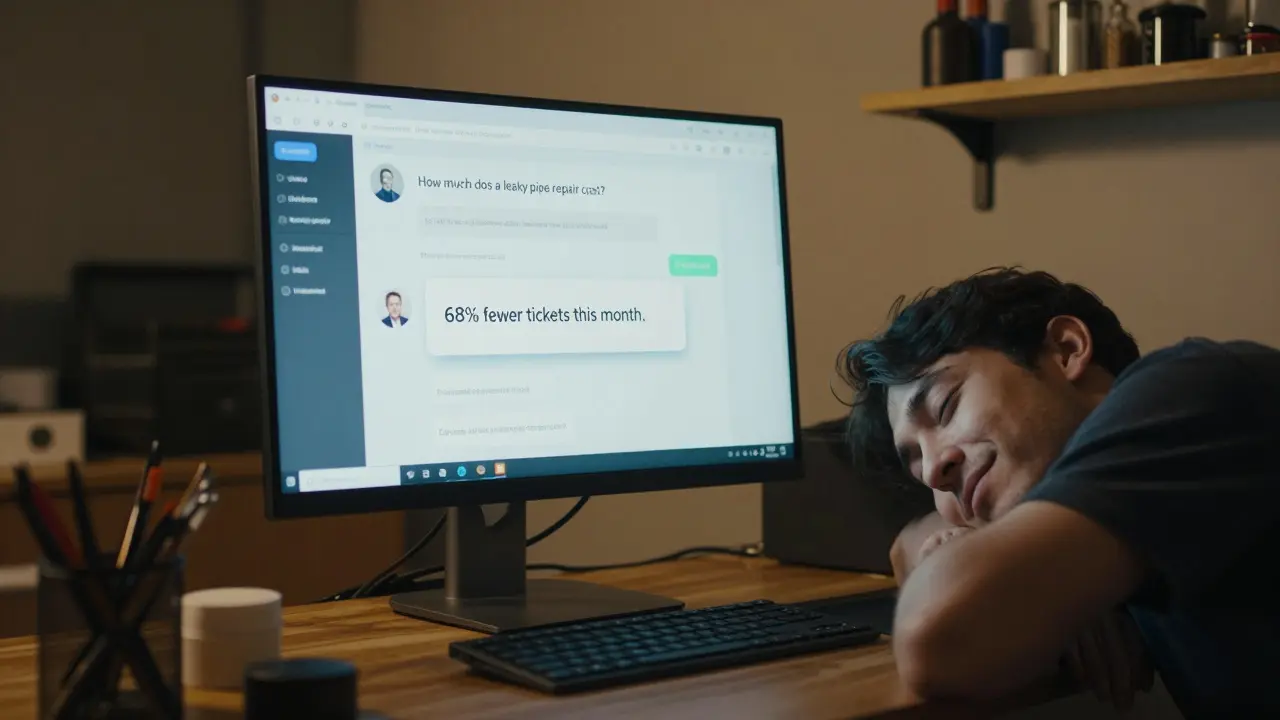
Take customer service. Instead of hiring more staff to handle routine questions, one Brisbane-based plumbing company used a free AI tool to scan past support tickets. It learned the top 10 questions customers asked - like "How much does a leaky pipe repair cost?" or "Do you offer emergency calls after hours?" - and built a chatbot that answers them instantly. Result? 68% fewer support tickets, and customers reported higher satisfaction because they got answers at 2 a.m. without waiting.
This isn’t magic. It’s pattern recognition. AI spots what humans miss because we’re tired, distracted, or overwhelmed. You just need to feed it the right data and let it work.
Automate the Invisible Work
Every business has hidden tasks that eat up hours - things no one talks about because they’re boring. Invoicing. Data entry. Calendar syncing. Email sorting. These aren’t glamorous, but they’re expensive.
A Sydney retail store was losing $12,000 a month because staff spent 15 hours a week manually matching sales records to bank deposits. They tried hiring an intern. Then they tried spreadsheets. Neither worked. Then they used a simple AI tool that connects to their bank, sales platform, and accounting software. It learned the patterns: "If a sale is made on Shopify at 3 p.m. on a Tuesday, it usually hits the bank by 5 p.m. Thursday." Within two days, it was auto-matching transactions with 99.2% accuracy. The staff now checks it once a week.
This is the secret: AI doesn’t replace people. It removes the friction so people can do work that requires judgment, creativity, or empathy. The AI doesn’t care if it’s Monday or Friday. It doesn’t get distracted by Slack messages. It just keeps going.
Forecasting Without the Guesswork
Ever made a big decision based on a gut feeling? You’re not alone. But in 2026, businesses that still guess at inventory, staffing, or marketing spend are falling behind.
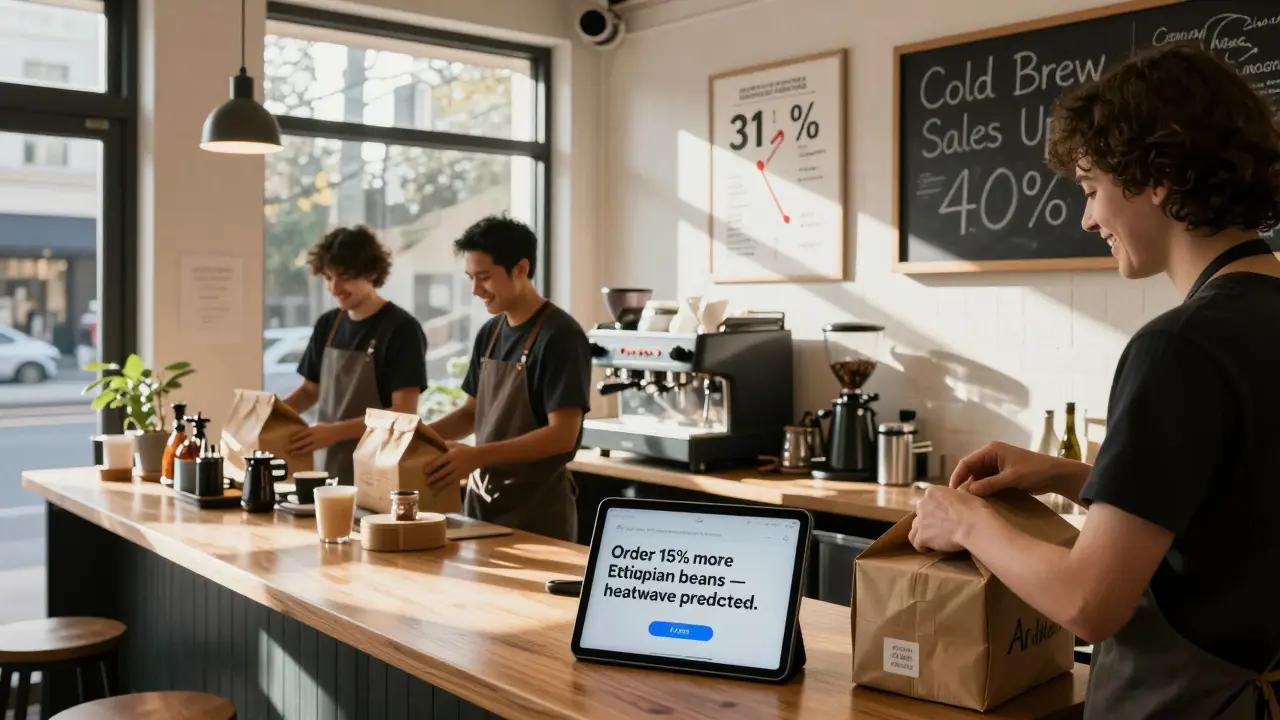
A Melbourne café chain used to order coffee beans based on last month’s sales - plus a hunch. Sometimes they ran out. Sometimes they had enough for six months. Then they tried an AI tool that looked at 18 months of sales data, weather patterns, local events, and even social media buzz around coffee trends. It started giving them weekly restock alerts: "Order 15% more Ethiopian beans next week - heatwave predicted, cold brew sales up 40% in similar suburbs."
They cut waste by 31%, reduced stockouts by 89%, and boosted profits by 17% in six months. No fancy AI platform. Just a tool that connects real data and speaks plainly.
Forecasting isn’t about predicting the future. It’s about reducing uncertainty. AI doesn’t tell you what will happen. It tells you what’s likely - and how much risk you’re taking if you ignore it.

Fix Problems Before They Happen
The best AI trick? Stopping disasters before they start.
A logistics company in Adelaide was losing $200,000 a year to late deliveries. Drivers were getting stuck in traffic. Routes weren’t optimized. Customers were angry. They tried hiring a route planner. Too expensive. They tried GPS apps. Too basic.
Then they used an AI system that pulls live traffic data, weather alerts, delivery windows, and even local construction permits. It doesn’t just suggest a route - it predicts delays before they happen. If a road closure is scheduled for Thursday at 8 a.m., it reroutes the entire morning schedule on Wednesday night. It even warns drivers: "Avoid this street - 30-minute delay expected. Take the bypass."
Now, 94% of deliveries are on time. The company didn’t buy new trucks. They didn’t hire more drivers. They just gave their existing team a smarter assistant.
This is the future: proactive AI, not reactive AI. It doesn’t wait for you to call for help. It sees the problem coming and quietly fixes it.
AI That Learns From Your Team - Not the Other Way Around
Too many companies treat AI like a boss. "Do this. Do that. Follow the rules."
The smart ones treat it like a teammate.
A software firm in Brisbane started recording team meetings - not to spy, but to learn. They fed the audio into an AI that flagged patterns: "Team spends 22 minutes every Tuesday debating which tool to use for testing." "New hires ask the same 3 questions in their first week."
They didn’t change their culture. They changed their onboarding. They created a short video answering those 3 questions. They automated the tool debate by setting a rule: "Use Jira unless you have a documented reason not to."
Result? New hires got up to speed 40% faster. Team meetings became 30% shorter. And morale went up because people felt heard - not micromanaged.
AI doesn’t have to replace human input. It can amplify it. If your team is saying the same thing over and over, let AI listen, then help you fix the system.
Start Small. Stay Consistent.
You don’t need to overhaul your whole business. Start with one broken process. Something that frustrates you. Something that wastes time or money.
Here’s how:
- Identify one repetitive task that takes more than 5 hours a week.
- Collect 10-20 examples of it (emails, tickets, invoices, forms).
- Use a free tool like Make.com, Zapier, or Google’s AI-powered Workspace features to automate it.
- Let it run for two weeks. Check the results.
- If it works - do it again with another task.
That’s it. No coding. No consultants. Just a habit: find friction, apply AI, repeat.
The businesses that win in 2026 aren’t the ones with the fanciest AI. They’re the ones that use it daily - quietly, consistently, and without fanfare.
What Happens If You Do Nothing?
Let’s be clear: AI isn’t optional anymore. It’s like electricity. You don’t have to understand how it works to use it. But if you ignore it, you’ll pay for it.
Customers expect instant answers. Suppliers expect accurate forecasts. Employees expect tools that make their work easier. If you’re still manually sending invoices, guessing inventory, or answering the same question for the 500th time - you’re not just inefficient. You’re outdated.
Competitors are already using these tricks. They’re saving money. They’re keeping customers. They’re growing.
You don’t need to be the first. You just need to be next.