Using AI to Tackle Climate Change: Real-World Applications and Impact
Climate change isn't just a distant threat anymore; it's here, affecting everything from your grocery bill to the stability of your local power grid. We’ve spent decades talking about reducing emissions, but progress has been painfully slow. That’s where artificial intelligence comes in. It’s not a magic wand that will fix the planet overnight, but it is a powerful tool that can help us cut through the noise, optimize our energy use, and predict disasters before they happen.
You might be wondering if AI itself isn’t part of the problem. It is. Training large models consumes massive amounts of electricity and water. But when we look at the bigger picture, the potential for AI to reduce global emissions far outweighs its own footprint-if we deploy it correctly. This article breaks down exactly how we are using AI to tackle climate change right now, moving beyond hype to real-world applications.
Optimizing Energy Grids with Machine Learning
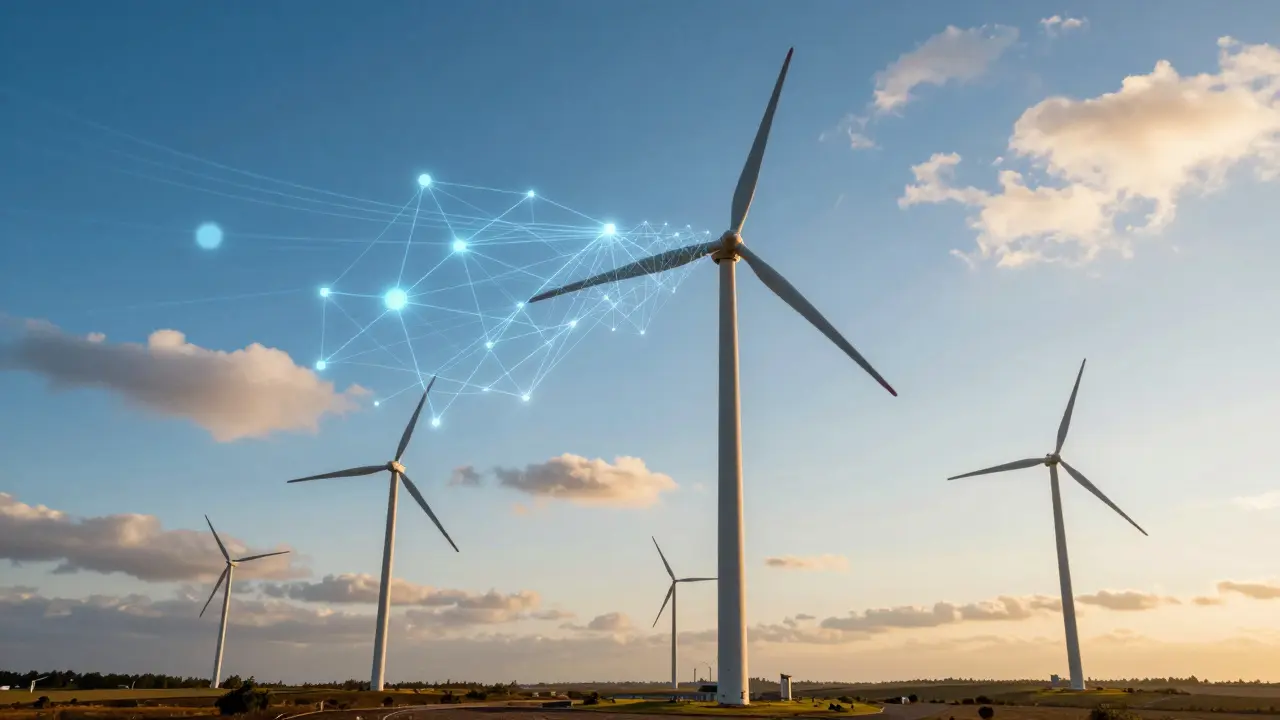
The biggest hurdle in transitioning to renewable energy is unpredictability. The sun doesn’t always shine, and the wind doesn’t always blow. Traditional power grids struggle to balance this variability without relying on fossil fuel backups. Machine learning algorithms are changing this dynamic by predicting energy supply and demand with remarkable accuracy.
Companies like Google have used their DeepMind AI to predict wind farm output up to 36 hours in advance. By analyzing historical data, weather forecasts, and sensor readings from turbines, the AI can tell grid operators exactly how much power will be available. This allows them to integrate more renewable energy into the grid safely. In tests, this approach increased the value of wind energy by 20%. Imagine applying that efficiency across every major grid in the world. The reduction in wasted energy-and the corresponding drop in carbon emissions-would be significant.
Beyond prediction, AI helps manage the flow of electricity in real-time. Smart grids use AI to detect outages instantly and reroute power around damaged lines. This resilience is crucial as extreme weather events become more frequent. Without these intelligent systems, we’d face longer blackouts and greater reliance on emergency diesel generators, which are dirty and inefficient.
Precision Agriculture: Feeding the World with Less Waste
Agriculture accounts for nearly a quarter of global greenhouse gas emissions. From methane released by livestock to nitrous oxide from fertilizers, farming is a major contributor to climate change. Yet, we need to feed a growing population. Precision agriculture uses AI to solve this paradox by ensuring farmers use only what is needed, exactly where it is needed.
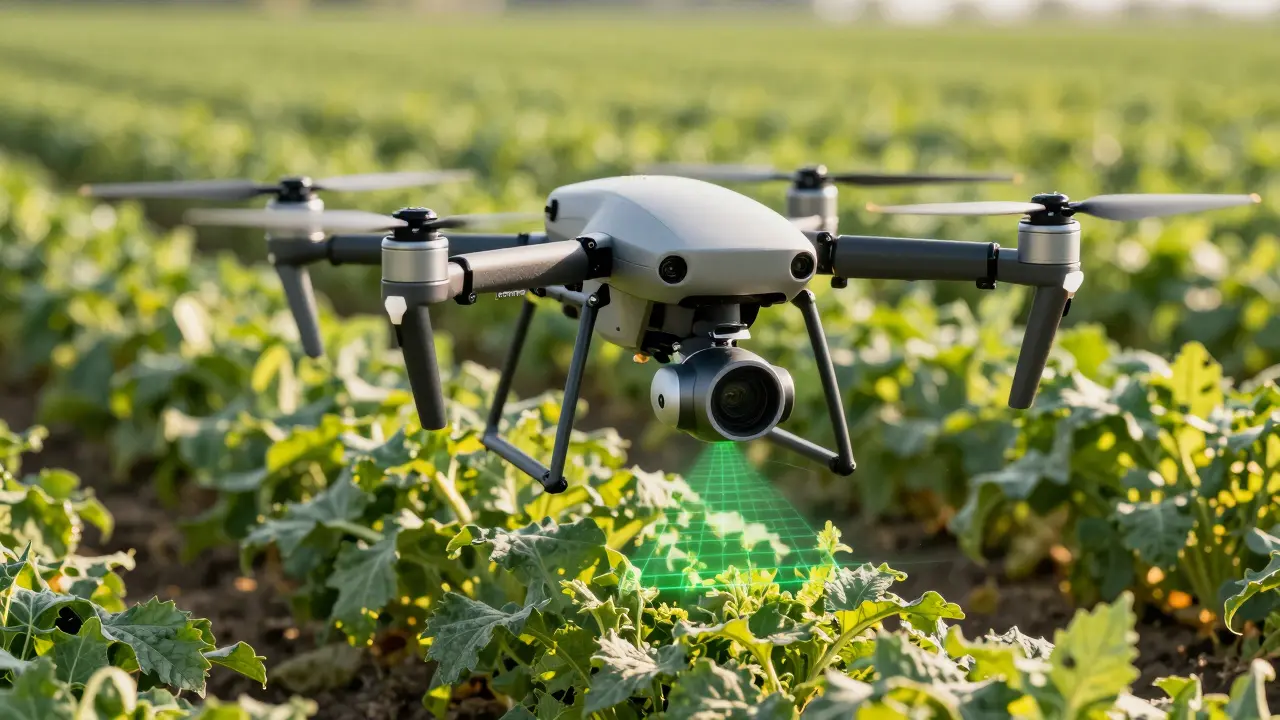
Drones equipped with computer vision can scan fields for signs of disease or nutrient deficiency. Instead of spraying an entire field with pesticides, a farmer can target specific plants. This reduces chemical runoff into waterways and lowers the energy required to produce those chemicals. John Deere, for example, integrates AI into their tractors to distinguish between crops and weeds. Their system can spray herbicides only on weeds, reducing chemical usage by up to 30%.
AI also optimizes irrigation schedules. Sensors in the soil measure moisture levels, and AI algorithms factor in weather forecasts to determine the optimal amount of water to apply. This prevents overwatering, which wastes resources and leaches nutrients from the soil. For regions facing drought, this technology is not just an environmental benefit-it’s a survival strategy.
Designing Better Materials for Carbon Capture
Capturing carbon dioxide directly from the air is one of the most promising ways to reverse climate change, but current methods are expensive and energy-intensive. Materials science traditionally relies on trial-and-error experimentation, which takes years. AI accelerates this process by simulating millions of molecular structures in seconds.
Researchers at MIT used an AI model called GNoME (Graph Networks for Materials Exploration) to discover over 2 million new stable materials. Among these were thousands of potential candidates for better batteries and catalysts for carbon capture. One such material could potentially absorb CO2 more efficiently than existing technologies while requiring less energy to release it for storage.
This speed-up in discovery is critical. We don’t have time to wait for traditional research cycles. By narrowing down the most promising compounds, AI allows scientists to focus their lab work on high-probability successes. This could lead to cheaper, more effective carbon capture solutions that can be deployed at scale within the next decade.
Protecting Forests and Biodiversity
Deforestation releases stored carbon back into the atmosphere and destroys habitats essential for biodiversity. Monitoring vast stretches of rainforest manually is impossible. Satellite imagery analysis powered by AI provides a solution by detecting illegal logging activities in near real-time.
Projects like Global Forest Watch use machine learning to analyze satellite images from NASA and ESA. The AI identifies changes in tree cover and alerts authorities immediately. In the Amazon, rangers receive notifications on their phones when chainsaws are detected, allowing them to intervene before significant damage occurs. This proactive approach has helped reduce deforestation rates in several key areas.
AI also aids in conservation efforts by tracking wildlife populations. Camera traps equipped with image recognition software can identify individual animals, helping researchers monitor species health and migration patterns. This data informs policy decisions and ensures that protected areas are managed effectively. Preserving forests and oceans is one of the cheapest and most effective ways to sequester carbon, and AI makes it possible to protect them on a global scale.
| Application Area | Primary Benefit | Key Technology | Estimated Impact |
|---|---|---|---|
| Energy Grid Optimization | Increases renewable integration | Predictive Analytics | Reduces fossil fuel backup by 15-20% |
| Precision Agriculture | Reduces chemical and water use | Computer Vision / IoT Sensors | Lowers fertilizer use by up to 30% |
| Material Discovery | Accelerates carbon capture tech | Generative AI / Molecular Simulation | Cuts R&D time from years to months |
| Forest Monitoring | Prevents illegal deforestation | Satellite Image Analysis | Enables real-time enforcement action |
The Hidden Cost: AI’s Own Carbon Footprint
We can’t talk about AI and climate change without addressing the elephant in the room: AI itself is energy-hungry. Training a single large language model can emit as much carbon as five cars over their entire lifetimes. Data centers housing these models require constant cooling, which consumes vast amounts of water and electricity.
To make AI truly sustainable, we need to focus on two things: efficiency and clean energy. First, developers are working on smaller, more efficient models that require less computing power. Techniques like pruning and quantification reduce the size of models without sacrificing performance significantly. Second, tech companies are increasingly powering their data centers with renewable energy. Google and Microsoft have committed to running on 24/7 carbon-free energy by 2030.
As users, we should also be mindful of how we use AI tools. Running unnecessary computations or using inefficient code contributes to the problem. Choosing providers who prioritize green infrastructure is a small but meaningful step.

Challenges and Ethical Considerations
Deploying AI for climate change isn’t without risks. There’s a danger of “solutionism”-believing that technology alone can fix systemic problems caused by human behavior and policy. AI cannot replace political will or corporate accountability. If governments continue to subsidize fossil fuels, no amount of AI optimization will offset the damage.
There’s also the issue of access. Advanced AI tools are often controlled by wealthy nations and corporations. Developing countries, which are often the most vulnerable to climate change, may lack the infrastructure to benefit from these technologies. Ensuring equitable access to AI-driven climate solutions is crucial for global justice.
Data privacy is another concern. Monitoring energy usage or agricultural practices requires collecting detailed data. Who owns this data? How is it protected? We need robust regulations to prevent exploitation and ensure that communities benefit from the insights generated.
What You Can Do Right Now
You don’t need to be a data scientist to contribute. Here are practical steps you can take:
- Support Green Tech: Choose energy providers that invest in renewables and smart grid technologies.
- Advocate for Policy: Push for regulations that require transparency in AI energy usage and promote green computing standards.
- Educate Yourself: Learn about the intersection of AI and sustainability. Understanding the basics helps you make informed decisions as a consumer and citizen.
- Reduce Digital Waste: Be mindful of your digital habits. Unsubscribe from unnecessary emails, delete old files, and avoid redundant cloud storage.
AI is a tool, not a savior. Its impact depends entirely on how we wield it. By combining technological innovation with ethical responsibility and political action, we can harness AI to build a more sustainable future. The clock is ticking, but we have the means to act.
Is AI good or bad for the environment?
AI has a dual impact. On one hand, training models consumes significant energy and water, contributing to carbon emissions. On the other hand, AI optimizes energy grids, reduces waste in agriculture, and accelerates the development of green technologies. The net effect depends on how efficiently AI is deployed and whether it is powered by renewable energy sources.
How does AI help reduce carbon emissions?
AI reduces emissions by optimizing processes. It predicts energy demand to minimize waste, enables precision farming to lower fertilizer use, discovers new materials for carbon capture, and monitors forests to prevent illegal logging. These efficiencies translate directly into lower greenhouse gas outputs.
What is the carbon footprint of training an AI model?
Training a large AI model can emit hundreds of kilograms to tons of CO2 equivalent, depending on the model size and hardware used. For perspective, training some large language models emits as much carbon as five cars over their entire lifetimes. However, inference (using the model) typically has a much smaller footprint.
Can AI stop climate change completely?
No, AI cannot stop climate change on its own. It is a tool that enhances human efforts. Solving climate change requires systemic changes in policy, economics, and behavior. AI supports these efforts by providing data, optimizing systems, and accelerating innovation, but it does not replace the need for political and social action.
Which industries are using AI for sustainability?
Key industries include energy (grid optimization), agriculture (precision farming), manufacturing (supply chain efficiency), transportation (route optimization), and construction (material efficiency). Each sector leverages AI to reduce resource consumption and lower its environmental impact.