The Future of Using AI in the Insurance Industry

It is March 2026, and the landscape of insurance has shifted more than anyone predicted just two years ago. Walk into any major agency in Belfast or London, and you won't see stacks of paper forms waiting to be filed. Instead, screens display real-time risk assessments calculated in milliseconds. This isn't science fiction; it is the daily reality of Artificial Intelligence integrated into financial protection services. We are no longer asking if AI belongs here. The question now is how deeply it will reshape our safety nets by 2030.
The Death of Manual Underwriting
Gone are the days when underwriters spent hours digging through medical records and vehicle histories. In 2024, the process was automated, but often required human oversight for final approval. By 2026, fully autonomous systems handle the bulk of Risk Assessmentthe evaluation of potential losses. These systems don't just check boxes; they analyze behavioral patterns. For example, usage-based insurance for cars is standard. Devices embedded in vehicles track driving habits continuously, adjusting premiums dynamically based on braking smoothness or time on the road.
This shift brings incredible efficiency but raises complex questions about data privacy. When an algorithm decides your premium based on how many nights you sleep soundly, do you accept that as fair? Companies must balance the efficiency of Machine Learninga subset of AI enabling computers to learn from data with the fundamental rights of policyholders. Regulatory bodies in the UK and EU have tightened guidelines recently to ensure these algorithms remain transparent. You can now request why a decision was made, and the system provides a readable explanation rather than a black box code snippet.
Claims Processing at the Speed of Light
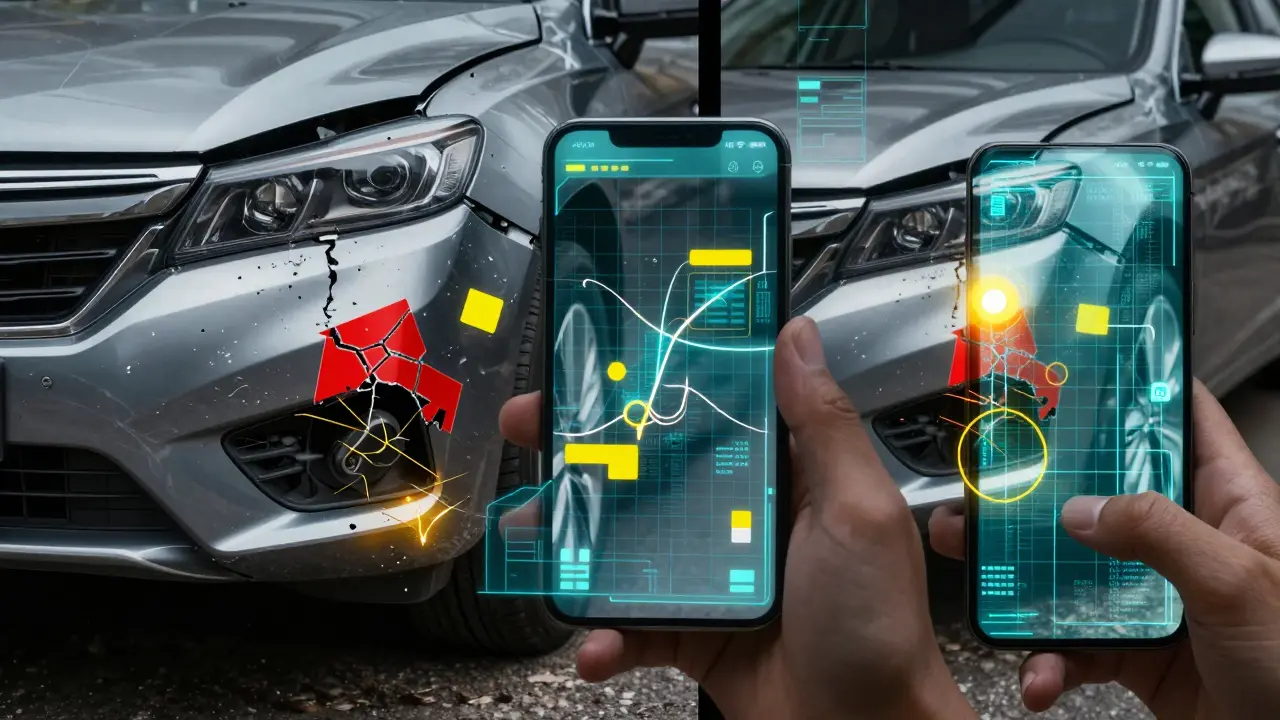
If underwriting is the gatekeeper, claims processing is where the rubber meets the road. Historically, filing a claim meant calling an agent, uploading photos, and waiting weeks for an adjuster to inspect damage. Today, customers open an app and photograph their cracked bumper. Computer Visiontechnology that enables machines to interpret visual data instantly estimates repair costs.
We saw significant growth in computer vision adoption between 2024 and 2026. Insurance giants deployed neural networks capable of identifying damage types and even detecting fraud indicators in images. A scratch that looks natural to us might show pixel irregularities to a bot, flagging a staged accident immediately. This reduces payouts for fraudulent claims and keeps premiums lower for honest drivers. However, the human element still matters for complex cases. If a claim involves structural damage to a heritage property, a physical surveyor is still dispatched. The AI acts as a triage nurse, sorting out the routine work so humans can focus on the intricate problems.
| Feature | Traditional Model | AI-Driven Model |
|---|---|---|
| Underwriting Time | Hours to Days | Seconds |
| Fraud Detection | Manual Review | Real-Time Pattern Recognition |
| Premium Calculation | Static Based on Demographics | Dynamic Based on Behavior |
| Customer Support | Call Centers & Email | Omnichannel Chatbots & Agents |
| Resolution Speed | Weeks for Complex Claims | Hours for Standard Claims |
Redefining Customer Experience
The relationship between insurer and insured used to be transactional. You pay, they cover you if disaster strikes. Now, the model leans heavily towards prevention. Wearable devices monitor health metrics, offering discounts for meeting fitness goals. Smart home sensors detect water leaks before they flood the kitchen. This proactive approach changes the nature of Customer Experiencethe perception and quality of interactions significantly.
We are seeing the rise of Generative AI assistants in customer service. These aren't the clunky chatbots of five years ago. They maintain context over long conversations and can draft legal documents related to coverage disputes. They guide users through policy language, explaining exclusions in plain English. This demystification helps consumers understand exactly what they are buying. It also reduces confusion during claims denial. When the AI explains the reason for denial based on specific policy clauses and relevant precedents, the frustration factor drops considerably.
Ethical Boundaries and Regulation
With great power comes great responsibility, and that applies heavily to algorithms. As we move deeper into 2026, the conversation around bias in AI is louder than ever. Early versions of risk models inadvertently penalized certain demographics based on historical data correlations. Modern regulations require auditing of datasets to ensure fairness. An algorithm cannot use zip codes as a proxy for race if that leads to discriminatory pricing.
Data privacy remains a critical concern. With every interaction generating data points, individuals worry about surveillance. GDPR and its successors have forced insurers to adopt "privacy by design." You control what data is shared. Some providers offer an opt-in tier where you share minimal data for basic coverage, accepting slightly higher premiums for less personal insight. This market segmentation allows people to choose their comfort level with surveillance versus cost savings.

The Workforce Transition
There is always fear when automation enters a sector. Will agents lose their jobs? The answer is mostly no, but their roles change drastically. Actuaries and underwriters are becoming "AI trainers" and compliance auditors. Instead of calculating risk manually, they teach the models how to interpret edge cases. The human job becomes one of strategic oversight rather than tactical execution.
New roles are emerging that didn't exist a decade ago. Chief Ethics Officers and AI Compliance Managers are now essential parts of leadership teams. In Belfast, tech hubs report a surge in hiring for professionals who understand both insurance law and data science. This hybrid skill set is rare and highly valued. It suggests that while the entry barrier for manual tasks disappears, the ceiling for high-level strategic thinking rises.
Looking Ahead to 2030
As we stand in 2026, the next three years will see full integration of blockchain with AI. Policies could run on smart contracts, automatically releasing funds upon verification of damage without human intervention. Imagine car insurance paying out immediately when connected car data confirms a collision. The friction of the financial transfer would vanish completely.
We might also see peer-to-peer insurance models matured by AI. Groups of people pooling risk with algorithms managing the pot distribution fairly. This decentralizes power from massive conglomerates back to community groups, managed by efficient code. The trust model shifts from trusting a big brand to trusting the transparency of the protocol governing the payout.
The trajectory is clear. Efficiency is going up, cost is potentially down, but complexity regarding ethics and data governance is increasing. The insurance industry isn't just selling policies anymore; it is curating safety ecosystems powered by intelligent systems. Whether you are an agent, a customer, or an investor, understanding these mechanics is vital for navigating the coming decade.
Will AI replace human insurance agents entirely?
Not entirely. While routine underwriting and simple claims are automated, complex cases, dispute resolution, and high-net-worth portfolios still require human empathy and strategic judgment. Agents are shifting toward advisory roles focused on interpreting AI outputs rather than performing manual calculations.
Is my data safe with AI-driven insurance?
Safety depends on the provider's compliance with current laws like GDPR. Most reputable companies now use encryption and allow users to select data sharing levels. You should ask providers about their data retention policies and whether third-party vendors access your raw information.
How does AI prevent insurance fraud?
AI uses pattern recognition across millions of claims to spot anomalies. For instance, if a claimant submits photos too quickly or uses edited images, the system flags them. It cross-references incident reports with police logs and telematics data to verify story consistency instantly.
Can I negotiate my premium if the AI says otherwise?
Yes, but negotiation happens differently. You cannot argue with code, but you can appeal the data inputs. If your lifestyle or risk factors have changed, you update your profile, and the system recalculates. Human agents help in presenting evidence that the initial model missed.
What is the biggest risk for insurers using AI?
The primary risk is algorithmic bias and reputational damage. If an AI is found to systematically disadvantage a protected group, the company faces massive lawsuits and loss of trust. Therefore, continuous auditing of decision-making logic is mandatory in 2026.