Python for AI: The Bridge to the Future of Tech
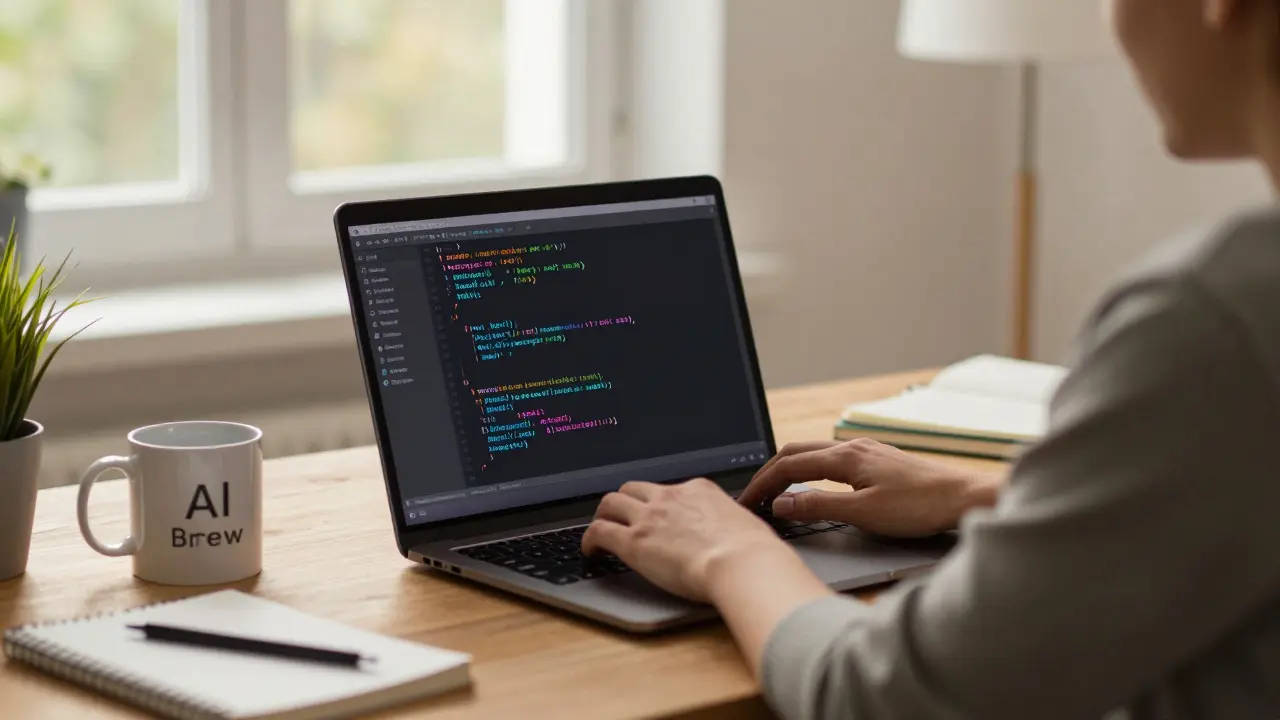
When you look at the most powerful AI systems today-whether it’s ChatGPT, self-driving cars, or medical diagnostic tools-you’ll find one common thread: Python. It’s not just popular. It’s the backbone. From startups in San Francisco to research labs in Belfast, Python is the language that turns ideas into working AI models. You don’t need a PhD to build something that learns. You just need Python.
Why Python? Not Just Another Programming Language
Python isn’t the fastest language. It’s not the most memory-efficient. So why does it dominate AI? Because it’s the most accessible. Writing a neural network in C++ takes weeks. Writing one in Python takes hours. And that speed matters. AI moves fast. If you can’t iterate quickly, you fall behind.
Take TensorFlow and PyTorch-two of the most used AI frameworks. Both were built for Python. They don’t just support it. They rely on it. You can write a deep learning model in under 10 lines of Python. Try that in Java or C#. You’ll spend the next day debugging compilation errors.
Python’s syntax is plain English. No semicolons. No curly braces. No complex memory management. You focus on logic, not syntax. That’s why teachers use it in intro courses. That’s why engineers use it in production. And that’s why AI researchers don’t waste time learning new tools-they just use Python.
The Libraries That Make AI Possible
Python doesn’t work alone. It’s the glue. And it’s held together by libraries built by thousands of developers worldwide. Here are the big ones:
- NumPy-handles numbers. Like, millions of them. Used for matrix math in neural networks.
- Pandas-cleans messy data. Real-world data is messy. Pandas turns chaos into clean tables.
- Scikit-learn-the go-to for traditional machine learning. Classifiers, regressors, clustering. All in one package.
- TensorFlow-Google’s powerhouse. Used in production systems that handle billions of requests daily.
- PyTorch-Facebook’s favorite. Loved by researchers for its flexibility. Easy to debug. Easy to modify.
- OpenCV-for computer vision. Recognizing faces, reading license plates, tracking motion.
These aren’t add-ons. They’re the foundation. You don’t build a house from scratch. You use bricks. Python gives you the bricks.
From Zero to AI Model in 48 Hours
Let’s say you want to build a model that predicts house prices. You don’t need a team. You don’t need a budget. Just Python.
Step one: Get data. Download a public dataset-like the Boston Housing dataset. It’s free. 506 entries. Clean.
Step two: Load it with Pandas. One line.
Step three: Use Scikit-learn to split it into training and testing sets. Two lines.
Step four: Pick a model. Linear regression? Random forest? One line.
Step five: Train it. One line.
Step six: Test it. One line.
Step seven: See how accurate it is. Boom. You’ve built a working AI model. In less than two days. No cloud server. No GPU. Just Python on your laptop.
This isn’t a demo. This is what real people do every day. A data analyst in Dublin used this exact approach to cut down mortgage approval times by 30%. A student in Belfast built a model that detects early signs of Parkinson’s from voice recordings. All with Python.

What You Can Actually Build With Python + AI
People think AI is about robots and self-driving cars. But most real-world AI is quieter. Here’s what’s already out there:
- Customer service chatbots-used by banks, airlines, and even local clinics. Built with Python and natural language libraries like Hugging Face.
- Supply chain forecasts-retailers use Python models to predict demand. Avoid overstocking. Prevent shortages.
- Medical imaging analysis-hospitals use Python to spot tumors in X-rays faster than radiologists.
- Energy optimization-smart grids in Northern Ireland use Python to balance electricity use during peak hours.
- Content moderation-social media platforms flag harmful posts using Python-trained models.
You don’t need to build the next ChatGPT. You just need to solve one problem. Better. Faster. Smarter.
Where Python Falls Short (And How to Handle It)
Python isn’t magic. It has limits.
Speed: If you’re processing 10 million images per second, Python alone won’t cut it. That’s where C++ or Rust steps in. But here’s the trick: you don’t rewrite Python. You let Python call the fast code. Libraries like NumPy and TensorFlow are already written in C. You get speed without the complexity.
Mobile apps: Python doesn’t run well on phones. But you can train your model in Python, then export it to TensorFlow Lite or ONNX. Run it on Android or iOS. The AI part stays in Python. The app part? That’s native code.
Real-time systems: If you need a response in 10 milliseconds, Python might be too slow. But for 90% of AI applications-recommendations, predictions, analysis-it’s more than enough.
The lesson? Don’t fight Python’s limits. Work around them. Use it where it shines. Layer in other tools when you need to.

The Future Is Already Built in Python
AI isn’t coming. It’s here. And it’s built in Python.
Every major tech company-Google, Meta, Microsoft, Tesla-uses Python as its core AI language. Every university teaches it. Every open-source AI project is in Python. Even China’s AI research labs? Mostly Python.
Why? Because it’s the only language that lets you go from idea to prototype to production without switching tools. You start with a notebook. You end with a deployed API. All in Python.
And the next wave? Generative AI. AI agents. Autonomous systems. They’re all built on the same stack: Python, PyTorch, Transformers. The bridge to the future isn’t made of steel or silicon. It’s made of code. And it’s written in Python.
Where to Start Today
You don’t need to master everything. Start small.
- Install Python (3.12 or newer).
- Install Jupyter Notebook. It’s your playground.
- Run this:
pip install numpy pandas scikit-learn - Load a dataset. Try the Iris flower dataset. It’s built into scikit-learn.
- Train a classifier. See how it predicts flower types.
- Change one thing. Try a different model. See what happens.
That’s it. You’re building AI. Not tomorrow. Today.
Do I need a math background to use Python for AI?
No. You don’t need to be a mathematician. You need to understand what a model does, not how every number is calculated. Libraries handle the math. You focus on data, questions, and results. Most successful AI practitioners learned Python first, then picked up math as they needed it.
Is Python the only language for AI?
No, but it’s the best. Other languages like R, Julia, and even JavaScript have AI tools. But none have the ecosystem. No other language has 500,000+ open-source AI projects. No other language has libraries that work together seamlessly. Python isn’t perfect-but it’s the only one that works for everyone.
Can I learn Python for AI without a computer science degree?
Absolutely. Thousands of people have switched careers into AI using Python alone. Online courses, free tutorials, and open datasets make it possible. You don’t need a degree. You need curiosity, practice, and the willingness to build something-anything-every week.
What’s the best way to practice Python for AI?
Build something real. Don’t follow tutorials blindly. Take a dataset you care about-your fitness tracker data, your Spotify listening history, your local weather records. Ask a question. Train a model. See if it answers correctly. Repeat. That’s how you learn. Not by watching, but by doing.
How long does it take to become proficient in Python for AI?
Three months of consistent practice is enough to build useful models. Spend 30 minutes a day. One project a week. After 12 weeks, you’ll be able to tackle real problems. Not because you memorized everything-but because you’ve solved real issues, made mistakes, and fixed them.