How Learning AI Can Boost Your Career

By 2026, learning AI isn't just for data scientists or tech startups-it's becoming the new literacy for almost every job. Whether you're in marketing, healthcare, finance, or even agriculture, knowing how AI works gives you a real edge. It's not about becoming a coder overnight. It's about understanding how machines think, what they can do, and how to use them to make your work faster, smarter, and more valuable.
AI Isn't Replacing Jobs-It's Changing Them
Remember when ATMs were first introduced? People thought bank tellers would disappear. Instead, tellers shifted from counting cash to advising customers on loans and investments. That’s exactly what’s happening with AI now. It’s not killing jobs-it’s reshaping them. The jobs that survive-and thrive-are the ones where humans work alongside AI, not against it.
Take customer service. AI chatbots handle routine questions, but the best support teams now use AI tools to predict customer frustration before it happens. They get alerts like: "This user has asked the same question three times-offer help." That’s not magic. That’s someone who learned how to read AI outputs and act on them.
A 2025 report from the World Economic Forum found that 44% of workers’ core skills will be disrupted by AI in the next five years. But here’s the kicker: 97% of companies that invested in AI upskilling saw productivity rise by over 30%. The people who learned how to use AI didn’t just keep their jobs-they got promotions.
What You Actually Need to Learn (No Coding Required)
You don’t need to build a neural network from scratch. You need to understand three things:
- How AI makes decisions-Not how it’s coded, but how it picks patterns. For example, an AI in hiring might flag resumes with certain keywords. Knowing that helps you tailor your own.
- What AI can and can’t do-It’s great at spotting trends in data, but terrible at understanding context. If you’re in sales, you can use AI to find leads, but you still need to build trust manually.
- How to ask the right questions-AI answers questions you give it. If you ask, "What are our top-selling products?" it gives numbers. If you ask, "Why are these products selling better than others?" it starts showing you deeper patterns.
Many online courses now teach AI literacy in under 10 hours. Platforms like Coursera, Google’s AI Essentials, and LinkedIn Learning have free modules that walk you through real workplace examples-like how a teacher uses AI to grade essays faster, or how a nurse uses AI to spot early signs of patient decline.
Real Jobs That Changed After Learning AI
Here are three real cases from Australia in 2025:
- Emma, a marketing coordinator-She took a 6-hour course on AI-powered analytics. Now she uses AI to predict which Facebook ads will perform best before spending a dollar. Her team’s conversion rate jumped 42% in three months.
- James, a construction supervisor-He learned how to use AI tools that scan site photos to detect safety hazards. Instead of walking the site every day, he now reviews AI-generated risk reports. He cut workplace incidents by 58%.
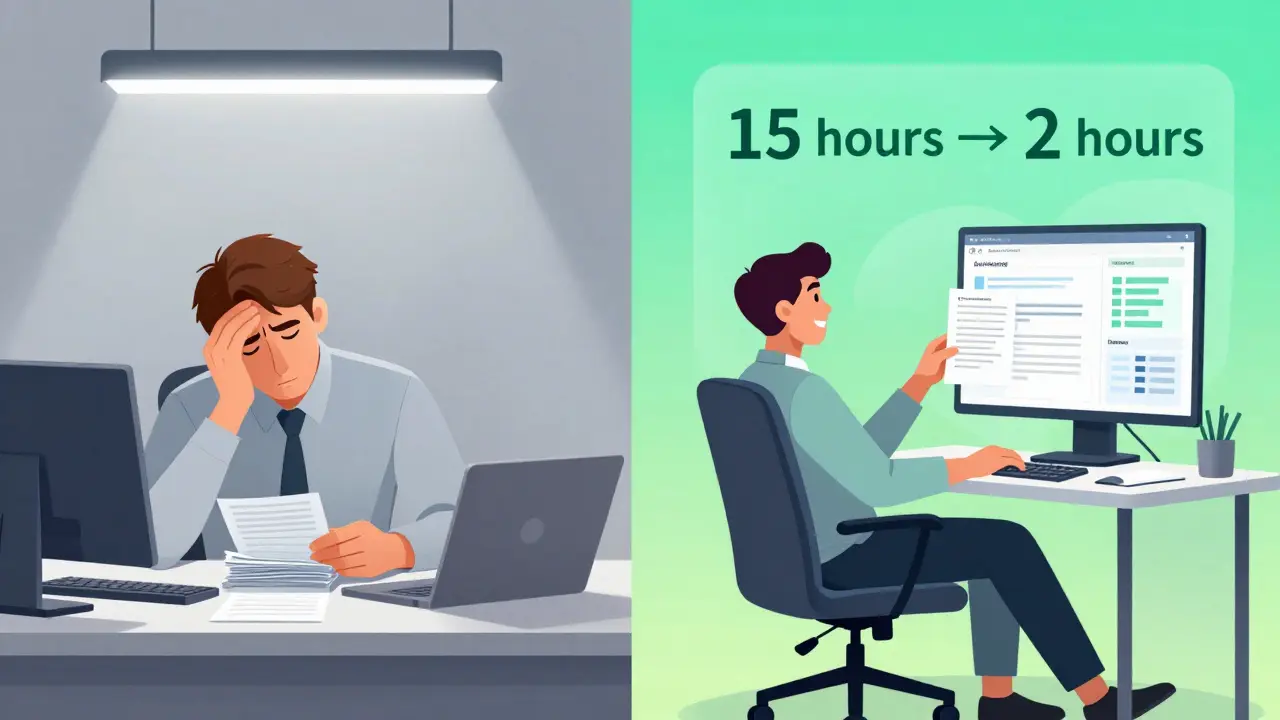
- Linh, an accountant-She used AI to automate invoice matching. What used to take her 15 hours a week now takes 2. She spends the extra time advising clients on tax strategy-and got promoted to senior advisor.
These aren’t tech workers. They’re regular people who learned just enough to use AI as a tool, not a threat.
Where AI Skills Pay Off the Most
Some fields are seeing faster career boosts than others. Based on 2025 job market data from Australia’s Department of Employment:
| Field | Average Salary Increase | Job Growth Rate (2024-2026) | Most In-Demand AI Skill |
|---|---|---|---|
| Marketing & Sales | 22% | 18% | Predictive analytics |
| Healthcare | 19% | 25% | Diagnostic AI tools |
| Finance & Accounting | 20% | 16% | Automated reporting |
| Education | 17% | 21% | Personalized learning AI |
| Manufacturing & Logistics | 15% | 23% | Supply chain forecasting |
Even in fields like retail or hospitality, workers who use AI to manage inventory, schedule shifts, or personalize customer offers are getting raises and more responsibility.
How to Start Learning AI-Without Getting Overwhelmed
Here’s a simple 3-step plan anyone can follow:
- Start with one tool-Pick one AI tool your job already uses. Maybe it’s Excel’s AI-powered forecasting, Google’s Gemini for research, or Canva’s AI design suggestions. Learn how it works. Don’t try to learn everything.
- Use it for one task-Find a repetitive task you hate. Use AI to handle it. For example: summarizing meeting notes, sorting emails, or generating weekly reports. Once it saves you time, you’ll want to use it more.
- Share what you learned-Tell your team how you saved 5 hours a week. Offer to show them. You’ll be seen as a problem-solver, not just a worker.
Most people fail because they think they need to learn Python or TensorFlow. You don’t. You just need to learn how to use AI like you’d use a calculator or a spreadsheet.
The Hidden Benefit: Confidence
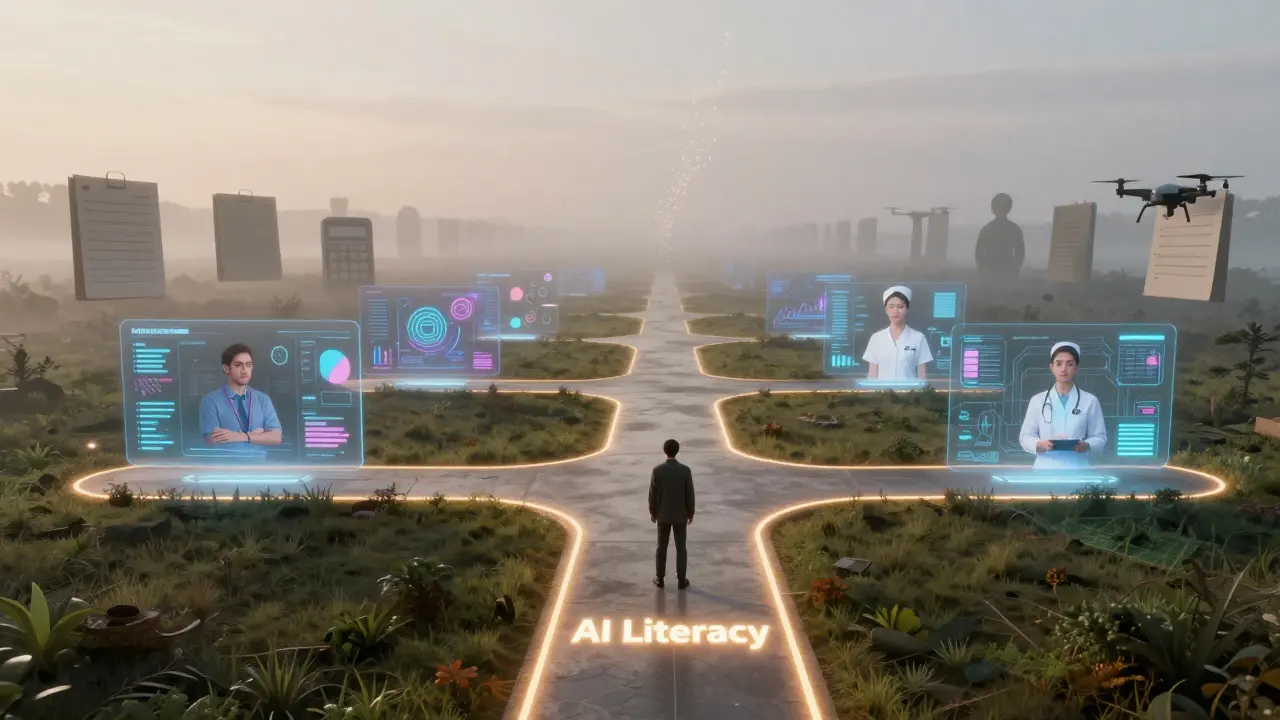
Learning AI does more than boost your resume. It changes how you see your own value. When you know how AI works, you stop feeling powerless. You stop wondering, "Will robots take my job?" and start thinking, "How can I use this to do better work?"
That mindset shift is what gets you noticed. Managers notice the person who finds smarter ways to do things. They promote the person who doesn’t wait for instructions-they experiment, adapt, and lead.
AI isn’t the future. It’s here. And the people who learn to work with it aren’t just surviving-they’re thriving.
Do I need a tech background to learn AI for my career?
No. You don’t need a degree in computer science. Most AI tools today are designed for non-technical users-like drag-and-drop analytics dashboards, AI assistants in Excel, or automated report generators. What matters is curiosity and willingness to experiment. Start with tools you already use, like Google Docs or Microsoft Teams, and see how AI features can help you.
How much time does it take to learn AI basics?
You can learn enough to make a real difference in under 10 hours. Many free courses-like Google’s AI Essentials or LinkedIn Learning’s "AI for Everyone"-break it down into 15- to 30-minute lessons. Focus on applying one skill to your daily work. After two weeks of using AI for one task, you’ll already be ahead of most colleagues.
What if my company doesn’t offer AI training?
Start on your own. Use free resources like Coursera, YouTube tutorials, or Mozilla’s AI Literacy curriculum. Then, show your manager what you’ve learned. For example: "I used AI to cut my weekly report time from 4 hours to 30 minutes-here’s how." Most managers will support you once they see the impact.
Is learning AI only useful for office jobs?
Not at all. Farmers use AI to predict crop yields. Electricians use it to diagnose wiring issues from photos. Retail workers use AI to track inventory in real time. Any job that involves data-numbers, patterns, or routines-can be made faster and smarter with AI. The tool changes, but the principle stays the same: learn how to ask better questions.
Will learning AI make me obsolete if I’m in a low-skill job?
Actually, the opposite. Low-skill jobs that involve repetitive tasks are the ones AI automates first. But if you learn how to use AI to improve those tasks, you move into a supervisory or advisory role. For example, a warehouse worker who learns to interpret AI inventory alerts becomes a logistics coordinator. The job doesn’t disappear-it evolves.
Next Steps: Start Small, Think Big
Don’t wait for your company to offer training. Don’t wait until you "have time." Pick one task you do every week that feels dull or time-consuming. Open your email, spreadsheet, or project tool. Look for an AI button. Click it. Try it. See what happens.
That’s how careers change-not with big leaps, but with small, smart choices. You don’t need to be the smartest person in the room. You just need to be the one who tries.