AI Tips for Branding: How to Scale Your Brand Strategy with AI
Most business owners treat their brand like a static logo and a set of colors. But in 2026, a brand isn't just a visual identity; it's a living data set of how people perceive you. If you're still guessing what your customers want or spending weeks on a single campaign mood board, you're falling behind. The real secret isn't replacing your creative team with bots, but using AI tips is about leveraging artificial intelligence to automate the tedious parts of market research and visual iteration while keeping the human emotional core intact. This guide shows you exactly how to inject AI into your branding workflow without losing your soul.
The Fast Track: AI Branding Cheat Sheet
Before we get into the weeds, here is the high-level play for integrating AI into your brand strategy today.
| Branding Phase | AI Tool Type | Outcome | Time Saved |
|---|---|---|---|
| Market Research | LLMs / Sentiment Analyzers | Precise Customer Personas | 80% |
| Visual Identity | Generative Image Models | Rapid Prototyping / Moodboards | 70% |
| Brand Voice | NLP Tuning Tools | Consistent Multi-channel Tone | 60% |
| Content Scaling | Agentic Workflows | Personalized Ad Creative | 90% |
Defining Your Persona with Data, Not Guesses
We've all seen those generic "Buyer Personas"-"Marketing Mary, 35, likes coffee and LinkedIn." They're useless. To build a brand that actually sticks, you need a psychological profile based on real behavior. This is where Large Language Models (LLMs) change the game. Instead of guessing, you can feed anonymized customer reviews, support tickets, and social media mentions into an AI to find the "unspoken pain points."
Try this: take your last 500 customer reviews and ask the AI to identify the top three emotional triggers that lead to a purchase. You'll often find that people aren't buying your product's features; they're buying a specific feeling, like "relief from chaos" or "professional validation." Once you have this, your brand strategy shifts from selling a thing to solving a specific emotional state. This is the difference between a generic brand and a cult brand.
Building a Visual Identity That Doesn't Look "AI-Generated"
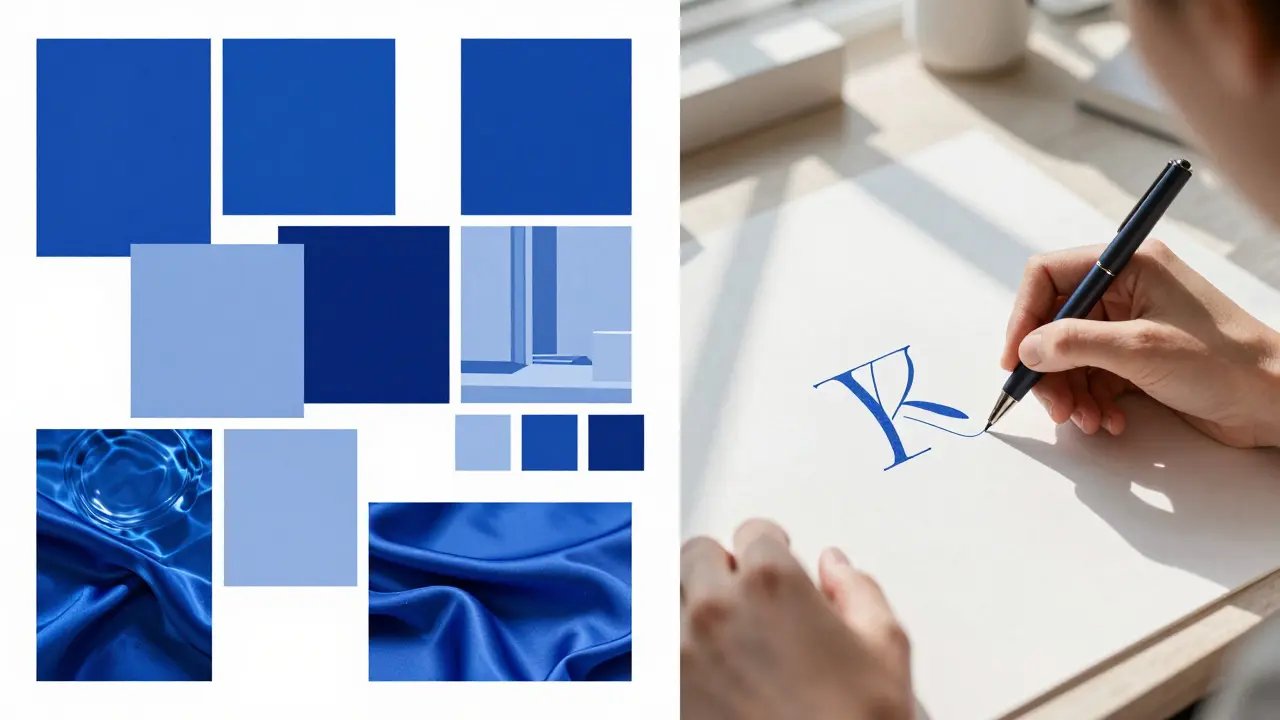
There is a huge risk with Generative AI in design: the "uncanny valley" look. If your branding looks like a generic Midjourney prompt, you'll look cheap. The pro move is using AI for conceptualization, not final execution. Use tools to generate 50 different mood board variations in ten minutes to explore directions you'd never have thought of. Use them to test how a specific shade of cobalt blue interacts with a minimalist layout across different cultural contexts.
For example, if you're launching a luxury skincare line, don't just ask for "luxury skincare logo." Instead, use AI to simulate the brand's visual presence in a high-end boutique in Tokyo versus a pharmacy in Berlin. This helps you understand if your visual identity is truly global or just a trend. The AI handles the iteration, and your human designer handles the refinement and the "soul" of the mark.
Automating Brand Voice Consistency
The biggest branding killer is inconsistency. Your Instagram sounds like a Gen-Z teenager, but your whitepapers sound like a Victorian lawyer. It confuses the customer. To fix this, create a "Brand Voice DNA" document. This isn't just a list of adjectives; it's a set of rules that you feed into an NLP (Natural Language Processing) system.
A strong brand DNA includes:
- Vocabulary Constraints: Words we never use (e.g., "synergy," "game-changer").
- Rhythmic Patterns: Do we use short, punchy sentences or long, flowing narratives?
- Emotional Anchor: Every piece of content must evoke a specific feeling, such as "curiosity" or "security."
Once this is programmed into your AI agents, you can run every piece of content through a "brand voice filter." The AI doesn't write the piece; it audits it. It flags sentences that deviate from your persona, ensuring that whether a freelancer or a CEO writes the email, it sounds like the brand.
Hyper-Personalization: The New Branding Frontier
Traditional branding is "one-to-many." You create one message and hope it hits everyone. AI allows for "one-to-one" branding. By using Predictive Analytics, you can tailor your brand's messaging based on the user's real-time behavior. This isn't just putting their name in an email; it's changing the entire brand narrative based on their intent.
Imagine a travel brand that changes its visual style and tone based on the user's search history. For the budget backpacker, the brand appears adventurous, raw, and energetic. For the luxury seeker, the same brand shifts to be elegant, serene, and exclusive. You are still the same company, but the expression of the brand adapts to the viewer. This creates a psychological bond because the customer feels the brand "gets" them on a personal level.

Avoiding the AI Branding Pitfalls
While the speed is intoxicating, there are a few traps that can ruin your reputation. The first is the loss of authenticity. If every customer interaction is a perfectly polished AI response, people will feel the lack of human connection. Branding is ultimately about trust, and trust is a human-to-human transaction. Use AI to optimize the delivery, but keep the strategy rooted in human empathy.
Another danger is "algorithmic drift." If you rely too heavily on AI to tell you what's trending, you'll end up looking like everyone else. AI is great at optimizing for the current average, but great branding is about being above the average. Don't let the data tell you to be boring just because "boring" has a higher click-through rate. Sometimes the most successful brand moves are the ones that the data predicted would fail but the human intuition said would win.
Can AI actually create a brand strategy from scratch?
Not entirely. AI can analyze data, generate options, and identify market gaps, but it lacks the "lived experience" to define a brand's core purpose or values. It can give you the what and the how, but the why must come from the founder or the strategic team. Use AI as a powerful research assistant and execution engine, not as the Chief Brand Officer.
Will using AI for my branding make me look generic?
Only if you use the default outputs. The key is "human-in-the-loop" design. If you take a raw AI image and put it on your website, yes, it will look generic. But if you use AI to explore a hundred concepts, pick the one that resonates, and then have a professional designer refine the details and add a human touch, the result is often superior to traditional methods.
How do I keep my brand voice consistent across different AI tools?
The best way is to create a centralized Brand Style Guide in a structured format (like JSON or a detailed PDF) that includes specific examples of "Right" vs "Wrong" phrasing. Feed this exact document into every AI tool you use as a system prompt. This ensures that the AI has a consistent set of rules to follow regardless of the specific platform.
What are the best AI tools for branding in 2026?
Focus on a stack rather than a single tool. Use high-end LLMs for persona development, specialized generative models for visual prototyping, and agentic workflow tools (like AutoGPT variants) for content distribution. The most successful brands are using integrated ecosystems where the data from the research AI flows directly into the creative AI.
Is AI branding expensive to implement?
Actually, it usually lowers the barrier to entry. Small businesses that couldn't afford a $50k branding agency can now use AI to perform high-level market analysis and visual exploration for a fraction of the cost. The investment shifts from paying for "labor hours" to paying for the expertise of a human who knows how to direct the AI.
Next Steps for Your Brand
If you're feeling overwhelmed, start small. Don't try to overhaul your entire identity in one weekend. First, take your current customer feedback and run a sentiment analysis to see if your perceived brand matches your intended brand. If there's a gap, use that data to tweak your messaging. Once you've nailed the voice, move into visual iterations. The goal is an evolution, not a sudden, jarring change that alienates your existing loyalists.